
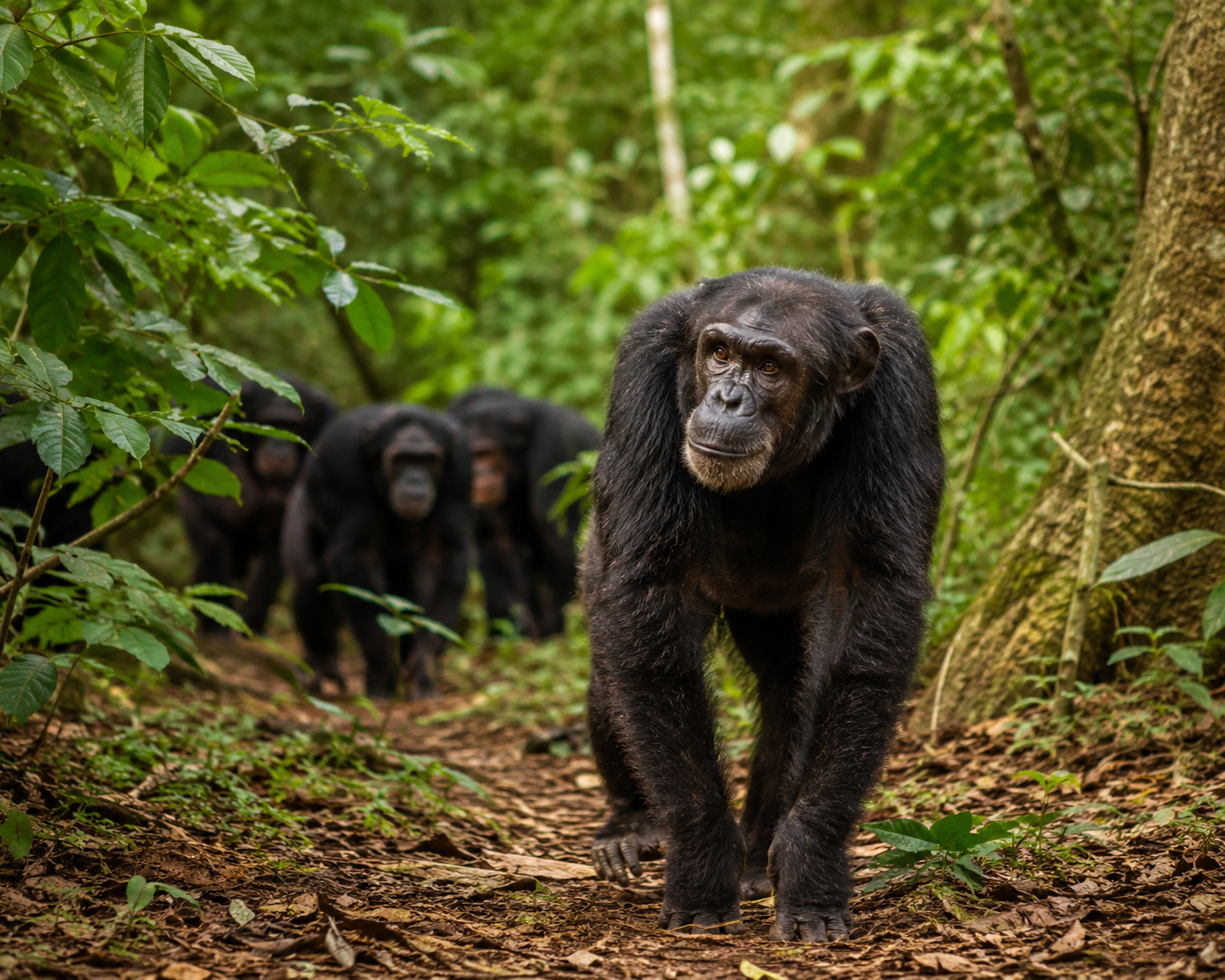
Gombe Stream Chimpanzee Trekking: Following the Families Jane Goodall Studied
A Gombe Stream chimpanzee trekking experience takes travelers into one of Tanzania’s most legendary wilderness areas, where wild chimpanzee communities continue to live in the forests studied by the world-famous primatologist Jane Goodall. For US travelers seeking a unique Tanzania safari holiday beyond traditional game drives, Gombe offers an intimate encounter with our closest wildlife relatives.
Located along the shores of Lake Tanganyika in western Tanzania, Gombe Stream National Park combines rainforest landscapes, fascinating chimpanzee behavior, and decades of conservation history. Unlike a traditional Big Five safari Tanzania experience, this journey focuses on primates, forest ecosystems, and the remarkable relationships between researchers, local communities, and wildlife.
A Gombe Stream chimpanzee trekking adventure is ideal for travelers who value authentic experiences, conservation-focused tourism, and rare opportunities to observe habituated chimpanzee families in their natural environment.
Gombe Stream Chimpanzee Trekking: Tanzania’s Legendary Primate Adventure
Gombe Stream chimpanzee trekking is one of Tanzania’s most unique wildlife experiences, allowing visitors to walk through rainforest trails and observe habituated chimpanzee communities in the same forests where Jane Goodall conducted groundbreaking research.
Unlike traditional safari experiences focused on large mammals, Gombe offers an immersive primate adventure centered around behavior, intelligence, and conservation.
Many travelers visit Tanzania dreaming of seeing lions in the Serengeti or elephants near the Ngorongoro Crater. However, western Tanzania offers another extraordinary wildlife experience that reveals a different side of Africa.
Gombe Stream National Park is one of Tanzania’s smallest national parks, covering approximately 35 square kilometers. Despite its size, its global importance is enormous because of the long-term chimpanzee research conducted there.
A Gombe Stream chimpanzee trekking journey allows visitors to:
- Walk through ancient forests
- Track wild chimpanzee groups
- Observe social interactions
- Learn about conservation efforts
- Experience the beauty of Lake Tanganyika
For travelers searching for an exclusive African safari experience, Gombe provides something rare: a personal connection with wildlife behavior rather than only wildlife sightings.
Gombe Stream Chimpanzee Trekking: The Legacy of Jane Goodall’s Research
Gombe Stream chimpanzee trekking is internationally recognized because Jane Goodall’s pioneering research began here in 1960, transforming global understanding of chimpanzee behavior and conservation.
The park remains one of the most important places in the world for studying wild chimpanzees and continues to inspire travelers interested in science, nature, and responsible tourism.
When Jane Goodall arrived at Gombe Stream in 1960, she began observing chimpanzees in their natural habitat. Her research revealed remarkable discoveries about chimpanzee intelligence, social structures, tool use, and relationships.
Today, visitors can walk through the same forest environment where decades of scientific research took place.
The importance of Gombe extends beyond tourism. The park represents:
- Wildlife conservation
- Long-term scientific research
- Protection of endangered species
- Community involvement
- Environmental education
For many travelers, visiting Gombe is not simply about seeing chimpanzees. It is about understanding the importance of protecting wildlife habitats for future generations.
What Makes Gombe Stream Different From Other Tanzania Safari Destinations?
A Gombe Stream chimpanzee trekking adventure differs significantly from popular northern Tanzania safari routes.
The Serengeti is famous for:
- The Great Migration
- Large predator populations
- Open savannah landscapes
Ngorongoro Crater is known for:
- Dense wildlife populations
- Dramatic scenery
- Big Five sightings
Gombe offers:
- Tropical rainforest trekking
- Chimpanzee encounters
- Primates and birdlife
- Lake Tanganyika scenery
- A conservation-focused experience
This makes Gombe an excellent addition to a wider Tanzania travel package for travelers who want more than a standard safari.
Why Choose Gombe Stream Chimpanzee Trekking for Your Tanzania Safari Holiday?
Gombe Stream chimpanzee trekking is perfect for travelers who want a deeper connection with Tanzania’s wildlife through walking safaris, primate encounters, and conservation-based tourism.
The experience combines adventure, education, and nature in a way that complements classic Serengeti safari tours and luxury safari itineraries.
A Tanzania safari holiday does not have to follow only one route. Many experienced travelers are now looking beyond famous parks to discover destinations with unique stories.
Gombe appeals to:
Wildlife Enthusiasts
Travelers fascinated by animal behavior will find Gombe completely different from a traditional game drive.
Chimpanzees display:
- Complex communication
- Family relationships
- Social learning
- Individual personalities
Watching these behaviors in the wild creates a memorable experience.
Conservation-Minded Travelers
Many luxury travelers today want their journeys to have meaning beyond sightseeing.
A visit to Gombe supports:
- Protected habitats
- Conservation programs
- Local employment
- Scientific research
The park demonstrates how responsible tourism can contribute to protecting endangered species.
Photographers Seeking Unique Stories
A photographic safari in Gombe is different from photographing lions or elephants.
Chimpanzee trekking photography focuses on:
- Expressions
- Social interactions
- Forest environments
- Human-like behaviors
Because chimpanzees move through dense forest, photographers benefit from patience and careful observation.
Travelers interested in specialized wildlife photography can also explore photographic safari experiences in Tanzania when planning their itinerary.
Gombe Stream Chimpanzee Trekking: Meeting Habituated Chimpanzee Families
The highlight of Gombe Stream chimpanzee trekking is meeting habituated chimpanzee families that have become accustomed to human observers through decades of careful research and conservation.
These encounters provide rare opportunities to observe natural chimpanzee behavior while maintaining strict wildlife protection guidelines.
Gombe’s chimpanzee communities are known individually by researchers and guides.
Visitors may learn about:
- Family groups
- Dominant individuals
- Social relationships
- Daily routines
Unlike a zoo or wildlife sanctuary, these chimpanzees remain wild animals living freely in their natural habitat.
How Chimpanzee Trekking Works in Gombe
A typical Gombe Stream chimpanzee trekking experience begins early in the morning.
The process usually includes:
Briefing Before the Trek
Guides explain:
- Safety rules
- Forest conditions
- Chimpanzee behavior
- Responsible viewing practices
Walking Through the Forest
Experienced guides track chimpanzee movements using knowledge developed from years of observation.
The trek may involve:
- Forest paths
- Uneven terrain
- Slopes
- Humid conditions
Observing the Chimpanzees
Once a group is located, visitors spend time quietly observing their behavior.
The focus is on:
- Watching natural interactions
- Understanding social structures
- Appreciating conservation efforts
Gombe Stream Chimpanzee Trekking: The Forest, Wildlife, and Lake Tanganyika Setting
Gombe Stream chimpanzee trekking combines rainforest exploration with spectacular views of Lake Tanganyika, creating one of Tanzania’s most scenic wildlife experiences.
The combination of forest, mountains, and freshwater landscapes makes Gombe different from Tanzania’s open savannah parks.
The park’s landscape includes:
- Tropical forest
- Steep valleys
- Waterfalls
- Mountain trails
- Lakeside scenery
Lake Tanganyika, one of the world’s oldest and deepest lakes, provides a dramatic backdrop to the experience.
Beyond chimpanzees, visitors may encounter:
- Red-tailed monkeys
- Blue monkeys
- Bushbuck
- Forest birds
- Butterflies
The biodiversity makes every trek unique.