
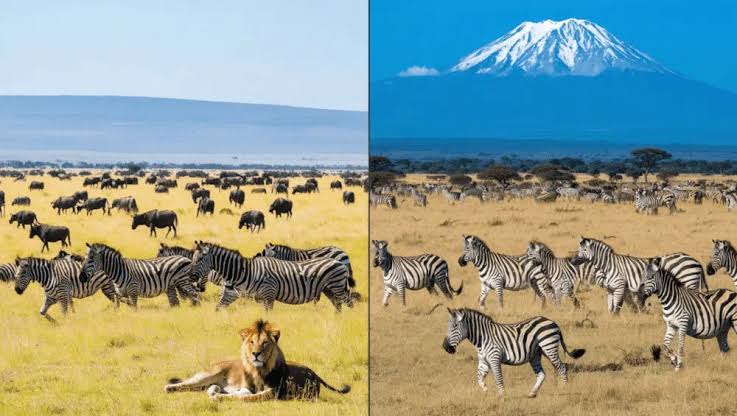
Combining Kenya and Tanzania in One Trip: The Ultimate Cross-Border Safari
A Kenya Tanzania combined safari is one of the most rewarding ways to experience East Africa in a single holiday. Instead of choosing between Kenya and Tanzania, travellers can combine the Masai Mara, Serengeti, Ngorongoro, Amboseli and other destinations into one carefully routed itinerary.
The challenge is logistics.
Kenya and Tanzania are neighbouring countries, but they are not one seamless safari destination. Border crossings, vehicle regulations, immigration procedures, domestic flights, conservation fees and transfer times all need to be considered.
A well-designed Kenya Tanzania combined safari can deliver extraordinary variety without wasting days on unnecessary transfers.
The key is deciding which destinations genuinely complement each other.
Kenya Tanzania Combined Safari: Is It Worth Doing Both Countries?
A Kenya Tanzania combined safari is worth considering when you have enough time to experience both countries properly rather than rushing between destinations.
The biggest advantage is variety.
Kenya can offer:
- Masai Mara.
- Amboseli.
- Samburu.
- Laikipia.
- Tsavo.
- Lake Nakuru.
Tanzania can offer:
- Serengeti.
- Ngorongoro Crater.
- Tarangire.
- Lake Manyara.
- Ruaha.
- Nyerere.
- Zanzibar.
Combining the countries becomes particularly attractive when you want to experience the Mara Serengeti combined ecosystem.
The Masai Mara and Serengeti form part of the same broader ecosystem, even though they are governed and managed separately.
You can therefore experience different perspectives on one of East Africa’s greatest wildlife landscapes.
Kenya Tanzania Combined Safari: How Many Days Do You Need?
At least 10 to 14 days is recommended for a comfortable Kenya Tanzania combined safari, while two to three weeks allows much more flexibility.
7–9 Days
Possible, but rushed.
You might choose:
- Nairobi.
- Masai Mara.
- Serengeti.
- Ngorongoro.
This itinerary prioritises the major highlights but involves significant movement.
10–14 Days
A much better balance.
You could include:
- Nairobi.
- Amboseli.
- Masai Mara.
- Serengeti.
- Ngorongoro.
14–21 Days
Ideal for deeper exploration.
You can add:
- Samburu.
- Laikipia.
- Tarangire.
- Zanzibar.
- Additional conservancy stays.
The more time available, the more worthwhile a cross-border itinerary becomes.
Kenya Tanzania Combined Safari: The Classic Mara to Serengeti Route
The most logical Kenya Tanzania combined safari for many first-time visitors connects the Masai Mara with the Serengeti and continues south toward Ngorongoro.
A classic route might look like:
Nairobi → Masai Mara → Isebania border → Serengeti → Ngorongoro → Arusha
Alternatively:
Nairobi → Amboseli → Arusha → Tarangire → Ngorongoro → Serengeti → Masai Mara
The correct direction depends on:
- Flight schedules.
- Season.
- Border arrangements.
- Desired wildlife areas.
- Accommodation availability.
- International arrival and departure points.
Kenya Tanzania Combined Safari: Kenya First
Starting in Kenya works particularly well for travellers flying into Nairobi and wanting to experience the Masai Mara before continuing south into Tanzania.
A possible itinerary:
Days 1–2: Nairobi
Arrive and recover from your international flight.
Days 3–5: Masai Mara
Spend several nights exploring the reserve or surrounding conservancies.
Day 6: Cross into Tanzania
Travel toward the border and continue into northern Tanzania.
Days 7–9: Serengeti
Spend several nights exploring different areas.
Days 10–11: Ngorongoro
Visit the crater and surrounding highlands.
Day 12: Arusha
Finish in Arusha or continue toward another destination.
This approach is particularly attractive for travellers who want a Mara Serengeti combined safari.
Kenya Tanzania Combined Safari: Tanzania First
Starting in Tanzania can make sense for travellers arriving through Kilimanjaro International Airport and wanting to finish in Kenya before flying home from Nairobi.
A possible itinerary is:
Kilimanjaro Airport → Arusha → Tarangire → Ngorongoro → Serengeti → Masai Mara → Nairobi
This can reduce unnecessary backtracking.
It is especially useful when international flights are easier or cheaper through Nairobi.
Kenya Tanzania Combined Safari: The Mara and Serengeti Connection
The Masai Mara and Serengeti are the natural centrepiece of a Kenya Tanzania combined safari because they form part of the wider Mara-Serengeti ecosystem.
The border does not stop wildlife movement.
Wildebeest, zebra, gazelles and predators move according to ecological conditions rather than national boundaries.
However, tourists cannot simply drive freely across the border.
The logistics are separate.
This distinction is important.
The ecosystem is continuous.
The tourism systems are not.
Kenya Tanzania Combined Safari: Cross-Border Safari Logistics
A cross border safari requires careful planning because safari vehicles, immigration procedures and operating permissions differ between Kenya and Tanzania.
Do not assume that the same safari vehicle can automatically operate throughout both countries.
Operators need to plan:
- Border crossing.
- Immigration.
- Vehicle arrangements.
- Driver-guide arrangements.
- Park permits.
- Conservation fees.
- Transfers.
In some itineraries, the most practical approach is to change vehicles or guides at the border or arrange separate country-specific operations.
Your safari operator should explain this before you travel.
Kenya Tanzania Combined Safari: Isebania Border
The Isebania border crossing is one of the routes used for connecting Kenya’s Masai Mara with Tanzania’s northern safari circuit.
The crossing connects the Kenyan side near Migori with Tanzania’s Mara Region.
For a Mara Serengeti combined itinerary, Isebania can be strategically useful.
However, border procedures can take time.
The actual journey should therefore not be planned around optimistic driving estimates.
Allow time for:
- Immigration.
- Customs procedures.
- Vehicle arrangements.
- Documentation.
- Lunch or refreshments.
- Road conditions.
Your operator should coordinate the crossing.
Kenya Tanzania Combined Safari: Tarime and Serengeti
Travellers continuing from the Isebania area toward Serengeti need to account for the distance and road conditions before reaching their accommodation.
The border crossing itself is only one part of the journey.
Once inside Tanzania, you still have to reach the relevant Serengeti sector.
This is why a border transfer should not automatically be treated as a short travel day.
Depending on the exact camp location, you may need several hours of driving.
The route can nevertheless be highly worthwhile when planned properly.
Kenya Tanzania Combined Safari: Amboseli and Northern Tanzania
Adding Amboseli to a Kenya Tanzania combined safari can create an excellent contrast between Kilimanjaro views in Kenya and the wildlife landscapes of northern Tanzania.
A possible itinerary is:
Nairobi → Amboseli → Arusha → Tarangire → Ngorongoro → Serengeti
This route avoids crossing directly from Amboseli into Tanzania through an informal tourist route.
Instead, travellers can use established transport and border arrangements.
Amboseli works particularly well before Tanzania because of its proximity to the northern Tanzanian circuit.
Read our Amboseli safari guide for more information.
Kenya Tanzania Combined Safari: Ngorongoro and Serengeti
Ngorongoro and Serengeti make an excellent Tanzania section of a Kenya Tanzania combined safari because they offer different wildlife environments within a relatively logical northern circuit.
The Serengeti provides vast plains and enormous wildlife landscapes.
Ngorongoro provides a concentrated crater ecosystem.
Many itineraries place Ngorongoro between Tarangire and Serengeti, although the order can vary.
If your primary goal is the Mara and Serengeti, avoid adding too many destinations simply because they are nearby on a map.
Every extra stop creates another transfer.
Kenya Tanzania Combined Safari: Tarangire as an Addition
Tarangire can be a useful addition to a Kenya Tanzania combined safari when you have enough time for a deeper northern Tanzania itinerary.
The park is known for:
- Elephants.
- Baobabs.
- Seasonal wildlife concentrations.
- Diverse landscapes.
It works particularly well as an opening or closing destination around Arusha.
However, if you have only eight or nine days, adding Tarangire may make the itinerary unnecessarily busy.
Kenya Tanzania Combined Safari: Should You Add Zanzibar?
Adding Zanzibar to a Kenya Tanzania combined safari can turn a wildlife-focused trip into a complete safari-and-beach holiday.
A common route is:
Kenya → Northern Tanzania → Zanzibar
For example:
Nairobi → Masai Mara → Serengeti → Ngorongoro → Zanzibar
This can work particularly well for:
- Honeymoons.
- Couples.
- First-time visitors.
- Travellers wanting wildlife and beach time.
Zanzibar can be reached from northern Tanzania through scheduled or charter flights depending on the itinerary.
Kenya Tanzania Combined Safari: Best Time to Travel
The best time for a Kenya Tanzania combined safari depends heavily on whether you prioritise the Great Migration, dry weather, fewer crowds or lower prices.
For a classic safari, June to October is widely attractive.
For the Mara Serengeti combined experience, July through October can be particularly interesting because migration activity may occur in the Mara.
However, migration timing varies annually.
Rainfall determines:
- Grass growth.
- Herd movements.
- Water availability.
- Wildlife distribution.
Do not treat migration dates as guaranteed.
Kenya Tanzania Combined Safari: Great Migration Planning
A Kenya Tanzania combined safari during migration season can provide spectacular wildlife opportunities, but the exact location of the herds cannot be guaranteed months in advance.
The migration is a natural process.
It does not follow a fixed tourist timetable.
The herds may move between:
- Southern Serengeti.
- Central Serengeti.
- Western Serengeti.
- Northern Serengeti.
- Masai Mara.
River crossings are particularly unpredictable.
A good operator should therefore design the itinerary around broader wildlife opportunities rather than promising a specific crossing on a specific day.
Kenya Tanzania Combined Safari: Dry Season
June to October is generally a strong period for a Kenya Tanzania combined safari because many areas experience relatively dry conditions and wildlife can become easier to locate.
Advantages include:
- Good visibility.
- Easier road conditions.
- Wildlife concentration.
- Strong photography.
- Comfortable game drives.
The disadvantage is demand.
Peak-season accommodation can become expensive.
Popular camps can also sell out months ahead.
Kenya Tanzania Combined Safari: Green Season
Green-season travel can offer lower visitor numbers, lush scenery and potentially lower accommodation prices across parts of Kenya and Tanzania.
The green season can be excellent for:
- Photography.
- Birding.
- Landscapes.
- Fewer vehicles.
- Value.
However, some roads can become difficult.
The itinerary should therefore use experienced local operators who understand seasonal road conditions.
Kenya Tanzania Combined Safari: Cost
The cost of a Kenya Tanzania combined safari depends on accommodation, vehicle arrangements, park fees, border transfers, internal flights, season and the number of travellers.
A broad planning range might be:
| Safari Style | Approx. Per Person Per Day |
|---|---|
| Budget/group | $180–$300 |
| Mid-range | $300–$500 |
| Premium | $500–$800 |
| Luxury | $800–$1,500+ |
A 12-day combined safari could therefore range from roughly $2,160 to $18,000+ per person.
These are planning ranges rather than fixed quotations.
International flights, visas, insurance, tips and personal expenses may be additional.
For more detail, read our Kenya safari cost breakdown.
Kenya Tanzania Combined Safari: Why the Cost Is Higher
A Kenya Tanzania combined safari can cost more than staying in one country because cross-border logistics add transfers, vehicle arrangements and additional conservation fees.
You may pay for:
- Kenya park fees.
- Tanzania park fees.
- Conservancy fees.
- Border transfers.
- Separate vehicles or guides.
- Domestic flights.
- Accommodation in both countries.
However, combining the countries does not necessarily mean doubling the cost.
A well-routed itinerary can use flights and road transfers strategically.
Kenya Tanzania Combined Safari: Accommodation Choices
Accommodation should be selected according to location rather than simply choosing the most luxurious property available.
In the Masai Mara, consider:
- Reserve camps.
- Private conservancies.
- Mobile camps.
- Permanent luxury camps.
In Tanzania, consider:
- Serengeti camps.
- Ngorongoro lodges.
- Tarangire camps.
- Arusha hotels.
Location can be more important than the number of stars.
A beautifully designed lodge several hours from your intended wildlife area may create unnecessary driving.
Kenya Tanzania Combined Safari: Private vs Shared
A private vehicle is usually the better option for a multi-country itinerary because it gives you greater control over timing and routing.
Private travel provides:
- Flexible departures.
- Personalised game drives.
- More control over stops.
- Better photography flexibility.
- Easier family travel.
Shared safaris can reduce costs but may introduce scheduling constraints.
For a complex cross border safari, flexibility can be valuable.
Kenya Tanzania Combined Safari: Flying vs Driving
Flights can save substantial time on a Kenya Tanzania combined safari, while road transfers allow travellers to see more of the landscape and can reduce certain transport costs.
Use flights when:
- You have limited time.
- The distance is large.
- Road travel would consume an entire day.
- You want to reach a remote camp efficiently.
Use road transfers when:
- The route is scenic.
- The distance is manageable.
- You have enough time.
- You want a more gradual journey.
The best itineraries normally combine both.
Kenya Tanzania Combined Safari: Example 10-Day Itinerary
A 10-day Kenya Tanzania combined safari can cover the major highlights without trying to visit too many parks.
Day 1: Nairobi
Arrival and overnight.
Days 2–4: Masai Mara
Three nights of game drives.
Day 5: Cross into Tanzania
Travel through the Isebania border and continue toward northern Tanzania.
Days 6–7: Serengeti
Two nights exploring the Serengeti.
Day 8: Serengeti
Full day of game viewing.
Day 9: Ngorongoro
Travel toward the crater area.
Day 10: Ngorongoro and onward travel
Crater experience followed by transfer toward Arusha or onward airport connection.
This is a compact itinerary.
For a more relaxed trip, add at least two or three days.
Kenya Tanzania Combined Safari: Example 14-Day Itinerary
Fourteen days provides much more breathing room and allows a Kenya Tanzania combined safari to include both major highlights and a few carefully selected additions.
Days 1–2
Nairobi.
Days 3–5
Masai Mara.
Day 6
Cross-border transfer.
Days 7–9
Serengeti.
Day 10
Ngorongoro.
Days 11–12
Tarangire or another northern Tanzania destination.
Day 13
Arusha.
Day 14
Departure or Zanzibar connection.
This structure reduces the feeling of constantly packing and unpacking.
Kenya Tanzania Combined Safari: Example 14-Day Mara, Serengeti and Beach Trip
A Kenya Tanzania combined safari followed by Zanzibar works particularly well when you want wildlife, landscapes and a beach holiday in one journey.
A possible route:
Nairobi → Masai Mara → Serengeti → Ngorongoro → Zanzibar
This gives you:
- Kenya wildlife.
- Mara conservancy options.
- Serengeti plains.
- Ngorongoro Crater.
- Indian Ocean beaches.
The beach extension also creates a natural slower-paced ending after several days of game drives.
Kenya Tanzania Combined Safari: Common Mistakes
The biggest mistake in a Kenya Tanzania combined safari is trying to cover too many destinations in too few days.
Avoid:
1. Too many one-night stays
You spend more time travelling than enjoying the destination.
2. Ignoring border logistics
Border crossings are real travel days.
3. Chasing guaranteed migration sightings
Nature does not follow a booking calendar.
4. Comparing prices without checking inclusions
A cheap quotation may exclude important fees.
5. Choosing camps based only on price
Location matters enormously.
6. Ignoring vehicle restrictions
Kenya and Tanzania have different tourism operating systems.
7. Forgetting international flight routing
Your arrival and departure airports should influence the itinerary.
Kenya Tanzania Combined Safari: Which Country Should You Spend More Time In?
There is no universal answer, but first-time visitors often benefit from allocating at least several days to each country’s major wildlife areas rather than treating one country as a quick add-on.
Spend more time in Kenya if you want:
- Masai Mara.
- Amboseli.
- Samburu.
- Laikipia.
- Conservancy experiences.
Spend more time in Tanzania if you want:
- Serengeti.
- Ngorongoro.
- Tarangire.
- Southern Tanzania.
- Zanzibar.
Your priorities should determine the split.
Kenya Tanzania Combined Safari: Which Is Better for Wildlife?
Both Kenya and Tanzania offer exceptional wildlife, and a combined itinerary is often more rewarding than trying to decide which country is objectively better.
Kenya is particularly strong for:
- Masai Mara.
- Conservancies.
- Amboseli elephants.
- Northern Kenya’s unique species.
Tanzania is particularly strong for:
- Serengeti scale.
- Ngorongoro.
- Tarangire elephants.
- Southern Tanzania’s remote parks.
The two countries complement rather than simply compete with each other.
Kenya Tanzania Combined Safari: Frequently Asked Questions
Can I combine Kenya and Tanzania on one safari?
Yes. A carefully planned itinerary can connect major destinations in both countries.
Can I drive from the Masai Mara to Serengeti?
Yes, but the transfer must use an authorised border crossing and appropriate vehicle arrangements.
What is the best border for a Mara Serengeti combined safari?
Isebania is one of the established routes used to connect the Masai Mara area with northern Tanzania.
How long should a Kenya Tanzania safari be?
Ten to fourteen days is a practical starting point. Two to three weeks allows a much more relaxed itinerary.
Is a Kenya Tanzania combined safari expensive?
It can cost more than a single-country safari because of additional logistics, but the final price depends on travel style and itinerary.
Can the same safari vehicle operate in both countries?
Vehicle and operating regulations differ. Arrangements should be confirmed with your safari operator rather than assumed.
Is the Kenya Tanzania border open to tourists?
Established crossings operate under immigration and border-control procedures, but requirements and operating conditions should be confirmed before travel.
Can I see the Great Migration in both Kenya and Tanzania?
Yes, depending on the time of year and herd movements. The migration moves through the wider Mara-Serengeti ecosystem.
Can I combine Kenya, Tanzania and Zanzibar?
Yes. Zanzibar can be added after a northern Tanzania safari using available flight connections.
Is Kenya or Tanzania better for a first safari?
Both are excellent. Kenya is particularly strong for the Masai Mara and conservancies, while Tanzania offers the Serengeti and Ngorongoro combination.
Should I fly or drive between Kenya and Tanzania?
It depends on the itinerary. Driving can make sense for the Mara-Tanzania connection, while flights can save time on longer routes.
Conclusion: Planning the Ultimate Kenya Tanzania Combined Safari
A Kenya Tanzania combined safari can create a remarkable East African journey, but the itinerary needs to be designed around logistics as carefully as wildlife.
The most natural combination for many first-time visitors is the Masai Mara and Serengeti, followed by Ngorongoro.
This creates a journey through one of the world’s most important wildlife ecosystems while allowing you to experience two different countries and tourism systems.
If you have more time, Amboseli, Tarangire, Samburu, Laikipia or Zanzibar can be added.
The most important principle is simple: do not try to see everything.
A carefully planned 12-day itinerary with several nights in each destination will usually be more rewarding than a 12-day trip with eight different stops.
When planning your cross border safari, allow realistic time for immigration and vehicle arrangements.
Check exactly what your quotation includes.
Confirm park and conservation fees.
Understand where vehicle changes occur.
And choose accommodation based on location as well as comfort.
For travellers who want the Mara Serengeti combined experience, the right routing can turn two separate national safari destinations into one cohesive East African adventure.
Plan Your Kenya Tanzania Safari With Odysseys From Africa
Odysseys From Africa can design a tailor-made Kenya Tanzania combined safari around your travel dates, budget and wildlife priorities.
We can arrange:
- Masai Mara safaris.
- Serengeti safaris.
- Ngorongoro Crater visits.
- Amboseli safaris.
- Tarangire safaris.
- Mara conservancy stays.
- Cross-border transfers.
- Private safari vehicles.
- Internal flights.
- Kenya and Tanzania itineraries.
- Safari and Zanzibar combinations.
- Luxury safari camps.
- Family safaris.
- Honeymoon itineraries.