
Serengeti in August and September: Spectacular Mara River Crossing Season
Serengeti August and September are among the most sought-after months for travellers hoping to witness the Great Migration in the northern Serengeti, particularly around the Mara River crossing season.
The famous images are unforgettable: thousands of wildebeest gathering on riverbanks, crocodiles waiting in the water, dust rising from the plains and animals eventually plunging into the river.
But the reality is more complicated.
A Mara River crossing September safari can be extraordinary, but no reputable operator can guarantee a crossing on a particular day.
The herds move according to rainfall, grazing conditions and instinct.
They may gather at a crossing point for hours or days.
They may approach the river and turn away.
They may cross when you are several kilometres away.
That uncertainty is part of what makes the migration so compelling.
The key is to plan intelligently, stay long enough and choose the right location.
Serengeti August: Why August Is a Peak Migration Month
Serengeti August is one of the most popular periods for following the migration because large herds can be concentrated in northern Serengeti and around the Mara River ecosystem.
By August, the herds have generally moved north from the southern and central Serengeti.
Some groups enter northern Tanzania.
Others move between the northern Serengeti and Kenya’s Masai Mara ecosystem.
The exact location changes constantly.
This makes Serengeti August especially suitable for travellers who want to experience the migration’s dramatic northern phase.
Serengeti September: Continued Mara River Action
Serengeti September can continue to provide opportunities for Mara River crossings, although the timing and frequency of crossings remain impossible to guarantee.
The migration does not stop at the end of August.
Herds can remain in the northern Serengeti and wider Mara ecosystem through September.
Some may cross between Tanzania and Kenya.
Others may remain on one side of the ecosystem depending on available grazing.
For travellers planning a Mara River crossing September safari, staying several nights in the right area is more important than trying to predict one specific crossing date.
Mara River Crossing Season: What Actually Happens?
The Mara River crossing season occurs when migrating wildebeest and zebra encounter the river as they move between grazing areas in the northern Serengeti and Masai Mara ecosystem.
A crossing can develop in stages.
First, animals gather.
Then they may move towards the riverbank.
They can wait for long periods.
Eventually, one or several animals may enter the water.
The rest of the herd may follow.
The result can be spectacular.
But it can also be chaotic.
Some crossings involve thousands of animals.
Others are much smaller.
Mara River Crossing Season: Why Crossings Are Unpredictable
The biggest mistake during crossing season is assuming that a migration calendar can predict the exact day and location of a river crossing.
The herds respond to natural conditions.
Factors include:
- Rainfall.
- Grass availability.
- Water levels.
- Temperature.
- Herd behaviour.
- Predator activity.
- River conditions.
An itinerary can be designed around historical patterns.
It cannot control the animals.
This is why responsible safari planning focuses on maximising the odds rather than guaranteeing a crossing.
Serengeti August and September: Where Should You Stay?
Choosing the right northern Serengeti location is one of the most important decisions when planning a Serengeti August or September migration safari.
Northern Serengeti accommodation can provide access to the migration route.
Depending on the exact location, travellers may consider:
- Northern Serengeti camps.
- Mobile migration camps.
- Permanent luxury camps.
- Camps near the Mara River.
- Camps positioned along seasonal migration routes.
The ideal property depends on the exact travel dates and the herd’s expected movement.
Serengeti August: Northern Serengeti
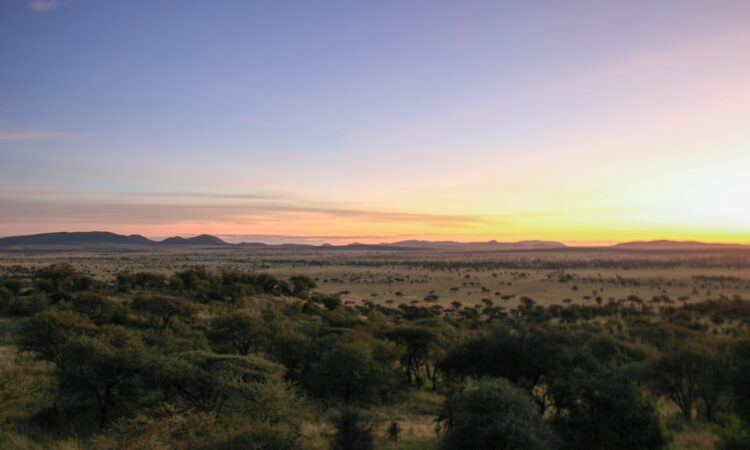
Northern Serengeti is particularly important during August because migrating herds can be spread across the region as they approach or move across the Mara River.
The landscape differs from the southern plains.
Northern Serengeti features:
- Rocky outcrops.
- Woodlands.
- Open grasslands.
- River systems.
- Hills.
- Seasonal water sources.
The region also supports substantial resident wildlife.
That means your safari does not depend entirely on seeing a crossing.
Serengeti September: Northern Migration
Serengeti September can provide continued access to the northern migration, making it an attractive month for travellers who want a chance at river crossings without visiting during the busiest part of August.
The herd location can still change.
Some animals may be:
- North of the Mara River.
- South of the Mara River.
- Near crossing points.
- Scattered across grazing areas.
This makes a flexible itinerary essential.
Mara River Crossing September: What Are the Odds?
A Mara River crossing September safari can maximise your chances of seeing a crossing by putting you in the right ecosystem for several days, but no itinerary can promise the event.
The best strategy is:
- Stay in the northern Serengeti.
- Allow several nights.
- Choose accommodation close to likely migration areas.
- Use experienced guides.
- Monitor daily herd movement.
- Remain flexible.
- Avoid treating one crossing report as a guarantee.
The more time you spend in the right area, the more opportunities you create.
Mara River Crossing Season: How Long Should You Stay?
Three to five nights in northern Serengeti gives travellers a substantially better opportunity to experience migration behaviour than a rushed one-night visit.
A longer stay allows you to experience different stages.
You may see:
- Herd gathering.
- Riverbank activity.
- A failed crossing attempt.
- A successful crossing.
- Herd movement away from the river.
- Predator activity around the migration.
Even without a crossing, the wildlife experience can be exceptional.
Serengeti August and September: What If the Herds Do Not Cross?
A missed crossing does not mean a failed safari because the northern Serengeti offers excellent wildlife beyond the river itself.
You can still see:
- Lions.
- Leopards.
- Cheetahs.
- Elephants.
- Buffalo.
- Giraffes.
- Hippos.
- Hyenas.
- Wildebeest.
- Zebra.
You may also witness the dramatic behaviour that happens before and after crossings.
In many cases, the waiting itself becomes part of the story.
Serengeti August and September: Predator Activity
The concentration of migrating herbivores can create exciting opportunities for predator sightings during August and September.
Northern Serengeti predators include:
- Lions.
- Leopards.
- Cheetahs.
- Hyenas.
- Jackals.
Predators may follow the herds.
They can also maintain territories independently of the migration.
A good guide will therefore search for resident wildlife as well as migration activity.
Serengeti August and September: Lions
Lions can provide excellent wildlife encounters during crossing season, particularly where large concentrations of wildebeest and zebra provide abundant prey.
Watch for:
- Pride behaviour.
- Hunting.
- Cubs.
- Mating.
- Territorial interactions.
- Feeding.
Do not assume that lions will always be hunting.
Much of their day is spent resting.
Patient observation often produces better sightings than constantly driving between locations.
Serengeti August and September: Leopards
Leopards remain one of the more difficult predators to locate, but northern Serengeti’s riverine habitats and woodland can provide suitable environments for sightings.
Look for:
- Large trees.
- Riverbanks.
- Rocky areas.
- Shaded woodland.
- Fresh tracks.
Leopard sightings depend heavily on local knowledge.
An experienced guide who knows the area can make a substantial difference.
Serengeti August and September: Cheetahs
Cheetahs can be found across suitable open habitats, where their speed and hunting strategy make them one of the Serengeti’s most fascinating predators to watch.
Cheetahs rely on visibility.
Open plains help them spot prey.
The migration can create additional opportunities when prey is concentrated.
However, cheetah sightings remain unpredictable.
Serengeti August and September: Photography
Serengeti August and September offer some of Tanzania’s most dramatic wildlife photography opportunities, particularly around riverbanks and large herds.
Photographers should prepare for:
- Dust.
- Strong sunlight.
- Fast-moving animals.
- Crowded crossing points.
- Long waits.
- Sudden action.
A telephoto lens is highly useful.
A wide-angle lens can also capture the scale of the landscape.
Carry spare batteries and memory cards.
You may spend hours waiting for the action and then experience several minutes of intense movement.
Mara River Crossing Season: Photography Etiquette
Good safari photography requires patience and respect for both wildlife and other vehicles.
Avoid:
- Blocking animals’ paths.
- Driving dangerously close to the riverbank.
- Shouting at animals.
- Demanding that guides chase wildlife.
- Blocking another vehicle’s view.
- Using flash unnecessarily.
The goal is to observe natural behaviour.
A good photograph should never come at the expense of the animals or other travellers.
Serengeti August and September: Weather
Serengeti August and September generally fall within the dry season, with warm days, cooler mornings and relatively low rainfall compared with the wetter months.
Travellers should expect:
- Cool early mornings.
- Warm afternoons.
- Strong sunlight.
- Dry landscapes.
- Dusty roads.
- Cooler evenings.
Layers are useful.
A warm fleece can be valuable on early morning game drives.
Serengeti August and September: What Should You Pack?
Packing for crossing season means preparing for cool mornings, strong sunshine, dust and long hours in a safari vehicle.
Recommended items include:
- Lightweight trousers.
- Long-sleeved shirts.
- Warm fleece.
- Light jacket.
- Hat.
- Sunglasses.
- Sunscreen.
- Comfortable shoes.
- Binoculars.
- Telephoto camera lens.
- Spare batteries.
- Extra memory cards.
- Dust protection for cameras.
- Reusable water bottle.
Neutral colours remain practical.
Serengeti August and September: Is It Peak Season?
August is generally a high-demand safari month, while September can also remain busy because of the continued migration and favourable dry-season conditions.
Demand can affect:
- Accommodation availability.
- Prices.
- Vehicle numbers.
- Popular crossing points.
This is particularly noticeable around famous river-viewing areas.
Travellers should book well in advance if they want a specific camp.
Serengeti August and September: Cost Considerations
A Serengeti August or September safari can cost more than a green-season trip because demand for northern migration accommodation is generally high.
Your total price may include:
- Accommodation.
- Park fees.
- Conservation fees.
- Safari vehicle.
- Guide.
- Meals.
- Internal flights.
- Transfers.
- Activities.
The location of the camp can have a major effect on the overall cost.
A premium camp near the migration route may command higher rates than a property farther away.
Serengeti August and September: Mobile Camps
Mobile migration camps can be particularly attractive during crossing season because they are designed around seasonal wildlife movement.
Their advantage is positioning.
Instead of choosing a property that stays in one place year-round, travellers may choose a camp positioned according to the expected migration route.
Ask your safari operator:
- Where will the camp be during my dates?
- How close is it to likely crossing areas?
- How many nights should I stay?
- What is included?
- Is the camp operating for the entire period?
Serengeti August and September: Private Safari vs Shared Safari
A private safari provides the flexibility that can be especially valuable during Mara River crossing season because waiting and responding to wildlife reports are central to the experience.
With a private vehicle, you can:
- Stay longer at sightings.
- Change routes.
- Wait near wildlife.
- Leave early.
- Return later.
- Adjust the itinerary.
Shared safaris can reduce costs.
However, private vehicles offer more control.
Serengeti August and September: Family Safaris
Families can enjoy crossing season, but parents should consider long game drives, early mornings and children’s ability to wait patiently for wildlife activity.
A private vehicle can make the experience easier.
Parents can adjust:
- Departure times.
- Game-drive duration.
- Meal arrangements.
- Rest periods.
For younger children, a safari should not be built entirely around waiting for a river crossing.
The wider wildlife experience should remain the focus.
Serengeti August and September: Honeymoon Safaris
August and September can be excellent honeymoon months for couples who want dry weather and the excitement of the Great Migration.
A romantic itinerary might combine:
Northern Serengeti → Central Serengeti → Ngorongoro → Zanzibar
This allows couples to experience:
- Migration.
- Big cats.
- Scenic landscapes.
- Luxury camps.
- Crater wildlife.
- Beach relaxation.
Private accommodation and private vehicles can add flexibility.
Serengeti August and September: How to Maximise Your Odds
The best way to maximise your chances of witnessing a Mara River crossing is to combine the right location, enough nights and flexible daily planning.
1. Choose northern Serengeti
Base yourself in the migration’s likely area.
2. Stay several nights
More nights create more opportunities.
3. Use an experienced guide
Local knowledge is invaluable.
4. Monitor herd movement
Conditions change quickly.
5. Avoid fixed expectations
A crossing cannot be ordered like an activity.
6. Consider a mobile camp
Seasonal positioning can be advantageous.
7. Keep the wider safari in focus
Northern Serengeti offers excellent wildlife even without a crossing.
Serengeti August and September: Common Mistakes
Crossing season is exciting, but unrealistic expectations can turn a good safari into a disappointing one.
Avoid these mistakes:
Expecting a crossing on a specific date
Nature does not follow a booking calendar.
Staying only one night
This gives you limited opportunity.
Choosing accommodation based only on price
Location is crucial.
Ignoring other wildlife
The Serengeti is much bigger than the Mara River.
Expecting every herd to cross
Some groups may turn around.
Treating online sightings as guarantees
A crossing reported today may be over before you arrive.
Serengeti August and September: Frequently Asked Questions
Is August a good time to visit the Serengeti?
Yes. August is a popular month for the Great Migration, particularly in northern Serengeti.
Is September a good time for the Serengeti?
Yes. September can continue to provide migration and Mara River crossing opportunities, although the timing remains unpredictable.
Can I see the Mara River crossing in August?
Yes, it is possible, but no responsible safari operator can guarantee a crossing.
Is September better than August for crossings?
Neither month is guaranteed to be better. Conditions vary each year and even from day to day.
Where should I stay for the Mara River crossing?
Northern Serengeti accommodation positioned near likely migration routes is generally the most strategic choice.
How many nights should I stay?
Three to five nights is a useful starting point for travellers specifically targeting crossing activity.
What happens if the animals do not cross?
You can still experience excellent wildlife, including lions, leopards, cheetahs, elephants, wildebeest and zebra.
Is August peak safari season?
August is generally a high-demand period, so popular camps can sell out well in advance.
Is the Mara River crossing dangerous for the animals?
Yes. Rivers contain natural hazards such as strong currents, steep banks and crocodiles. The danger is part of the natural migration process.
Can I cross the Mara River during a safari?
No. Visitors observe the migration from designated areas and safari vehicles; the animals are the ones making the crossing.
Conclusion: Why Serengeti August and September Are Spectacular
Serengeti August and September offer one of the most dramatic chapters of the Great Migration, with northern Serengeti becoming an important stage for the movement of wildebeest and zebra and potential Mara River crossings.
The key word is potential.
A river crossing cannot be guaranteed.
But you can improve your chances.
Choose the right location.
Stay long enough.
Use an experienced guide.
Remain flexible.
And understand that the migration is a natural process rather than a scheduled performance.
For travellers who dream of seeing thousands of wildebeest gathering beside a river, Serengeti August and Mara River crossing September deserve serious consideration.
Even if the river remains quiet, the northern Serengeti can deliver an exceptional safari filled with predators, resident wildlife, landscapes and migration activity.
Plan Your Serengeti Migration Safari With Odysseys From Africa
Odysseys From Africa can create a tailor-made migration itinerary around your travel dates, preferred accommodation and safari priorities.
We can arrange:
- Serengeti August safaris.
- Serengeti September safaris.
- Mara River crossing itineraries.
- Northern Serengeti safaris.
- Great Migration safaris.
- Mobile camp experiences.
- Private safari vehicles.
- Photography safaris.
- Luxury safari accommodation.
- Family safaris.
- Honeymoon safaris.
- Ngorongoro Crater safaris.
- Zanzibar beach extensions.
- Kenya and Tanzania combined safaris.