

Great Wildebeest Migration: A Complete Viewing Guide
The Great Wildebeest Migration is the largest overland wildlife movement on earth, involving more than 1.5 million wildebeest accompanied by zebra and gazelle across the plains of northern Tanzania and southern Kenya. This Serengeti migration guide explains exactly when and where to witness the movement, how seasonal patterns affect viewing, and how to plan a safari around the migration cycle.
Unlike a single-event spectacle, the Great Wildebeest Migration is a continuous, year-round ecosystem movement driven by rainfall patterns and grazing availability. Understanding the seasonal phases is essential for choosing the correct travel window.
Understanding the Migration Cycle
The migration primarily unfolds within the ecosystem linking Serengeti National Park and Maasai Mara National Reserve. While river crossings receive the most media attention, they represent only one phase of a broader ecological rotation.
December to March: Calving Season (Southern Serengeti)
From late December through March, the herds gather in the southern plains of the Serengeti near Ndutu. This period marks calving season, when approximately 500,000 calves are born within a few weeks. Predator activity intensifies as lions, cheetahs, and hyenas take advantage of vulnerable newborns.
For photographers and wildlife enthusiasts, this phase of the Great Wildebeest Migration offers dramatic predator-prey interaction and excellent visibility due to shorter grass.
Best for:
-
Predator sightings
-
Baby wildlife
-
Photography
-
Fewer crowds compared to river crossing season
April to June: The Long Rains & Movement North
As rains taper off, the herds begin moving northwest through the central and western Serengeti. Columns of wildebeest stretch for kilometers across open plains.
By June, early river crossings may occur along the Grumeti River in western Serengeti. While less dramatic than Mara crossings, they still offer powerful wildlife encounters.
Best for:
-
Expansive herd landscapes
-
Moderate safari pricing
-
Fewer vehicles compared to peak season
July to October: River Crossings (Northern Serengeti & Masai Mara)
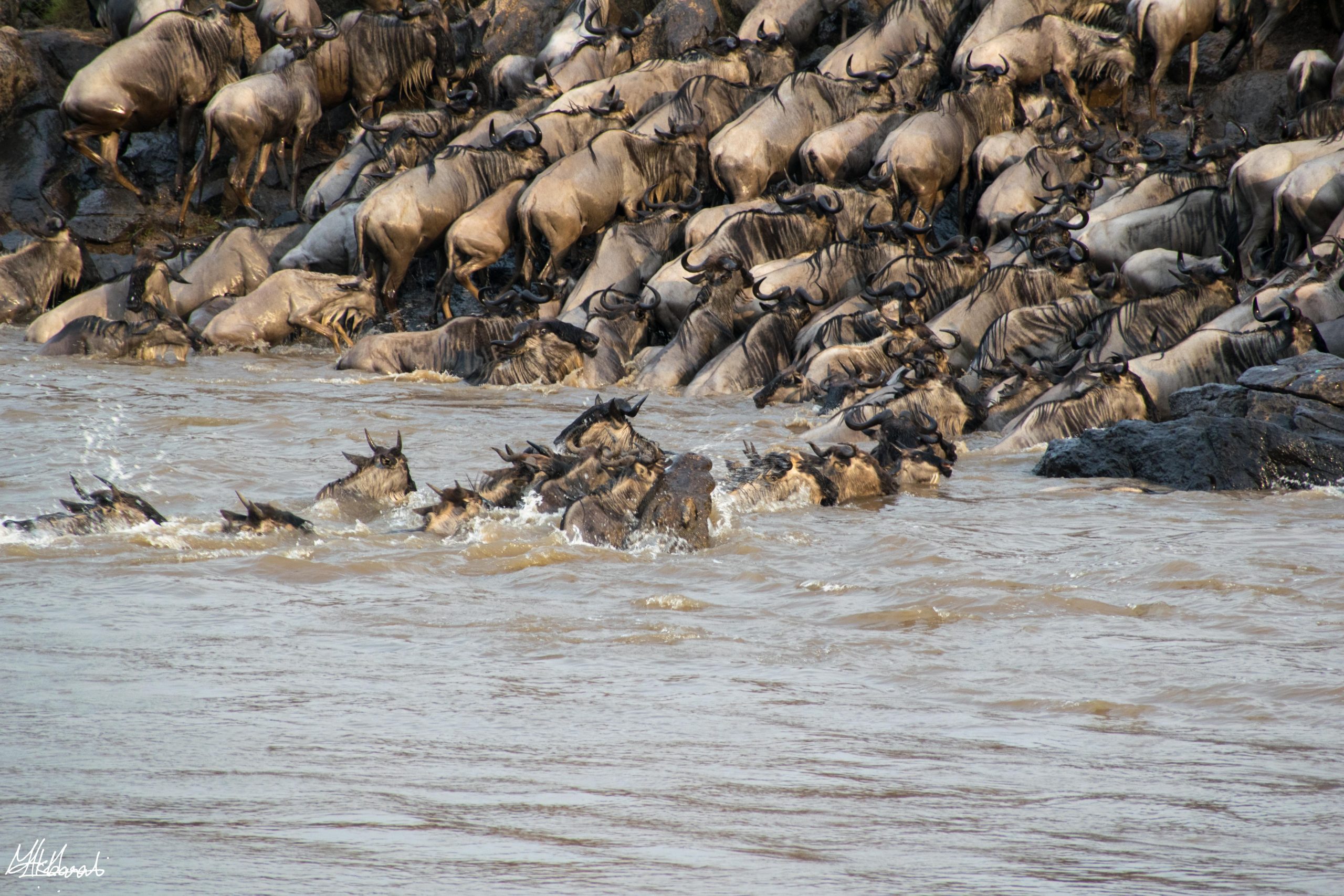
This is the most sought-after phase of the Great Wildebeest Migration. Herds gather along the Mara River, where they attempt dangerous crossings into Kenya’s Maasai Mara.
River crossings are unpredictable. Herds may wait hours or days before plunging into crocodile-filled waters. Timing cannot be guaranteed, but positioning your safari in northern Serengeti between late July and September maximizes probability.
Best locations:
-
Northern Serengeti (Kogatende area)
-
Maasai Mara National Reserve (August–September)
This period delivers iconic imagery but also commands peak-season pricing and higher vehicle density.
November: The Return South
With the short rains beginning in November, the migration gradually moves south back toward central and southern Serengeti. Crowds thin, landscapes turn green, and wildlife disperses across the ecosystem.
This is one of the most underrated periods in any Serengeti migration guide.
Where to See the Great Wildebeest Migration
Choosing the correct geographic base is more important than choosing the country. The Great Wildebeest Migration spends approximately 75 percent of the year in Tanzania.
Key viewing regions:
-
Southern Serengeti (December–March)
-
Central Serengeti (April–June & November)
-
Northern Serengeti (July–October)
-
Maasai Mara (August–September peak presence)
Staying in camps strategically positioned near seasonal herd movement dramatically increases success rates.
Best Time to See the Great Wildebeest Migration
There is no single “best” month — only the best time for your preferred experience.
-
Best for calving: January–February
-
Best for river crossings: August–September
-
Best for fewer crowds: June or November
-
Best for photography variety: January–March
If river crossings are your primary objective, plan 8–10 days to increase probability rather than booking a short 3–4 day window.
How Much Does It Cost to See the Migration?
Because migration camps are seasonal and in high demand, pricing varies significantly.
Typical daily ranges (excluding international flights):
-
Mid-range migration safari: $450–$650 per person per day
-
Luxury migration safari: $800–$1,500 per person per day
-
Fly-in migration safari: higher due to charter logistics
Peak months (July–September) command the highest rates. Calving season often offers better value with equally dramatic wildlife viewing.
Tanzania vs Kenya for Migration Viewing
Tanzania offers longer migration presence, particularly in southern and central Serengeti. Kenya’s Maasai Mara provides more compact terrain, which can concentrate wildlife but also vehicles.
For travelers prioritizing exclusivity and longer herd access, northern Serengeti often provides a more controlled experience compared to peak-season Mara congestion.
Planning Considerations
When structuring a migration safari, consider:
-
Booking 9–12 months in advance for peak season
-
Selecting mobile camps that move with herd patterns
-
Choosing operators based in Arusha for Serengeti-focused logistics
-
Allocating sufficient days in a single migration zone rather than splitting across distant parks
Migration timing is rainfall-driven and cannot be predicted with exact precision. A properly designed itinerary increases likelihood without overpromising.
Final Thoughts
The Great Wildebeest Migration is not a single-day spectacle but a year-round ecological movement. Understanding the seasonal cycle is essential for planning a successful safari. This Serengeti migration guide provides the framework, but execution depends on accurate timing, correct camp placement, and realistic expectations.
For tailored migration itineraries aligned with seasonal herd positioning, contact Odysseys From Africa:
Location: Arusha, Tanzania
Email: info@odysseys-from-africa.com
Phone: +254 (0) 710 450 797 | +255 (0) 652 810 255
Website: https://odysseys-from-africa.com/

