
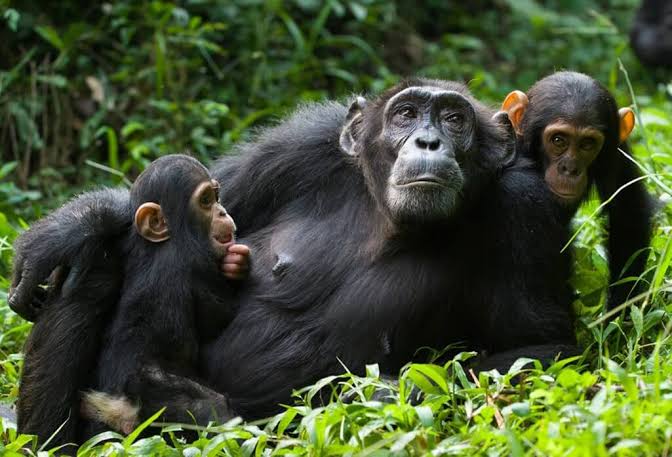
Mahale Chimpanzee Trekking: What Makes It Special?
Mahale chimpanzee trekking offers one of Tanzania’s most remarkable wildlife experiences, taking travellers into forested mountains to search for wild chimpanzees in their natural habitat. Tanzania is famous for the Serengeti, Ngorongoro Crater and the Great Migration.
Mahale chimpanzee trekking offers one of Tanzania’s most remarkable wildlife experiences, taking travellers into forested mountains to search for wild chimpanzees in their natural habitat.
Tanzania is famous for the Serengeti, Ngorongoro Crater and the Great Migration.
But there is another side of the country that rewards travellers willing to go farther.
On the shores of Lake Tanganyika, Mahale Mountains National Park offers an extraordinary combination of chimpanzees, forest, mountains and tropical lakeshore scenery.
Farther north, Gombe National Park is internationally famous for chimpanzee research and Jane Goodall’s pioneering work with wild chimpanzees.
Both destinations offer chimpanzee trekking.
Both require more logistical planning than Tanzania’s most accessible safari parks.
And both provide something completely different from a conventional game drive.
Instead of sitting in a vehicle searching across open plains, you walk through forest.
You listen for calls.
You look for movement in the canopy.
You follow tracks and signs.
And eventually, if conditions allow, you may find a wild chimpanzee group.
For travellers interested in primates, conservation, photography and unusual safari experiences, Mahale chimpanzee trekking deserves serious consideration.
Mahale Chimpanzee Trekking: What Makes It Special?
Mahale chimpanzee trekking combines wild chimpanzee encounters with the dramatic setting of the Mahale Mountains and Lake Tanganyika.
The landscape is extraordinary.
The mountains rise behind the forest.
Lake Tanganyika stretches along the park’s western edge.
Dense vegetation provides habitat for chimpanzees and other forest wildlife.
The result is a safari experience that feels completely different from the open savannahs of the Serengeti.
A trek can involve walking through:
- Forest.
- Mountain foothills.
- Woodland.
- Streams.
- Steeper terrain.
The exact route depends on where the chimpanzees are located.
That unpredictability is part of the experience.
Mahale Chimpanzee Trekking: Finding the Chimpanzees
Mahale chimpanzee trekking is a guided search rather than a guaranteed wildlife viewing experience, because chimpanzee groups move through a large forest environment.
Trackers and guides use knowledge of the animals’ behaviour and recent movements to determine where to search.
You may hear chimpanzees before seeing them.
Listen for:
- Calls.
- Branch movement.
- Vocalisations.
- Feeding activity.
- Movement through the canopy.
Once a group is located, the experience changes.
Instead of searching, you can observe.
Chimpanzees may:
- Feed.
- Rest.
- Groom.
- Travel.
- Play.
- Communicate.
The behaviour can be remarkably expressive.
Mahale Chimpanzee Trekking: How Fit Do You Need to Be?
Mahale chimpanzee trekking requires a reasonable level of fitness because the terrain can be uneven, steep and challenging depending on where the chimpanzees are located.
You do not necessarily need to be an experienced mountaineer.
However, you should be comfortable with:
- Walking for several hours.
- Uneven ground.
- Slopes.
- Humidity.
- Forest trails.
- Occasional steep sections.
The trek length can vary significantly.
Chimpanzees do not position themselves for visitor convenience.
If they move deeper into the forest, the search can become more demanding.
Travellers should discuss mobility limitations with their safari operator before booking.
Mahale Chimpanzee Trekking: What Should You Wear?
The right clothing makes Mahale chimpanzee trekking more comfortable, especially in warm, humid forest conditions and on uneven trails.
Recommended clothing includes:
- Lightweight long trousers.
- Long-sleeved shirt.
- Comfortable hiking shoes.
- Socks that protect against insects.
- Light rain jacket.
- Hat.
- Sunglasses.
- Small backpack.
Avoid clothing that is difficult to move in.
Your footwear should provide good grip.
The forest floor can become slippery after rain.
Mahale Chimpanzee Trekking: What Should You Carry?
A small daypack with water, rain protection, binoculars and essential personal items is useful during Mahale chimpanzee trekking.
Consider carrying:
- Drinking water.
- Camera.
- Extra batteries.
- Binoculars.
- Rain protection.
- Insect repellent.
- Sunscreen.
- Small snacks if permitted.
- Personal medication.
- Waterproof bag.
Keep your equipment compact.
You will be walking.
A heavy camera bag can quickly become uncomfortable.
Mahale Chimpanzee Trekking: How Close Can You Get?
Chimpanzee trekking follows strict wildlife-viewing rules designed to protect both visitors and the animals.
Your guide determines the appropriate viewing position.
You should never:
- Chase chimpanzees.
- Move independently towards them.
- Attempt to touch them.
- Feed them.
- Shout at them.
- Make sudden movements.
Chimpanzees are wild animals.
Respecting their space is essential.
The objective is observation, not interaction.
Mahale Chimpanzee Trekking: How Long Does It Take?
Mahale chimpanzee trekking can vary from relatively short walks to several hours of searching depending on chimpanzee location, terrain and conditions.
There is no fixed duration that applies to every trek.
A group may be nearby.
Or the chimpanzees may have moved deeper into the forest.
This means travellers should avoid planning another tightly timed activity immediately after the trek.
Allow flexibility.
Gombe Chimps: Tanzania’s Famous Research Legacy
Gombe chimps are internationally recognised because Gombe National Park became one of the world’s most important sites for long-term chimpanzee research.
The destination is closely associated with Jane Goodall.
Her work began at Gombe in 1960 and transformed scientific understanding of chimpanzee behaviour.
Gombe therefore offers more than a wildlife encounter.
It connects visitors with one of the most influential chapters in modern primatology.
Gombe Chimps: What Can You See?
Gombe chimps can provide fascinating opportunities to observe social behaviour, feeding, movement and communication in a natural forest environment.
Depending on the encounter, you may observe:
- Grooming.
- Feeding.
- Resting.
- Travelling.
- Vocal communication.
- Social interactions.
- Infant behaviour.
Chimpanzee societies are complex.
Watching them for an extended period can reveal behaviour that is impossible to understand from a brief sighting.
Gombe Chimps: How Difficult Is the Trek?
Gombe chimpanzee trekking can involve challenging forest terrain, with difficulty depending on the location of the chimpanzees and the route required to reach them.
The park’s terrain includes:
- Forest.
- Hillsides.
- Slopes.
- Valleys.
- Streams.
Fitness requirements therefore vary.
Travellers should prepare for walking rather than thinking of Gombe as a conventional vehicle safari.
Gombe Chimps vs Mahale Chimpanzees
Gombe and Mahale both offer chimpanzee trekking, but their landscapes, access arrangements and overall safari experiences are different.
| Feature | Mahale | Gombe |
|---|---|---|
| Main attraction | Chimpanzees and wilderness | Chimpanzees and research history |
| Setting | Mountains and Lake Tanganyika | Forested hills beside Lake Tanganyika |
| Experience | Remote wilderness | Research-focused destination |
| Access | More complex | Usually reached through regional connections |
| Other appeal | Beach, mountains, forest | Primates and Jane Goodall legacy |
| Ideal traveller | Adventure and wildlife enthusiasts | Primatology and wildlife enthusiasts |
Neither destination is automatically better.
The best choice depends on what you want from the trip.
Mahale Chimpanzee Trekking: Mahale Mountains National Park
Mahale Mountains National Park combines chimpanzee habitat with mountain scenery, forest and the shores of Lake Tanganyika.
The combination is unusual.
A morning can involve chimpanzee trekking.
Later, you can return towards the lakeshore.
Depending on your accommodation and itinerary, additional activities may include:
- Swimming.
- Kayaking.
- Boat excursions.
- Fishing where permitted.
- Forest exploration.
- Birdwatching.
This makes Mahale particularly appealing for longer stays.
Mahale Chimpanzee Trekking: Lake Tanganyika
Lake Tanganyika adds a spectacular aquatic dimension to Mahale chimpanzee trekking and creates opportunities to combine primate viewing with lakeside relaxation.
The lake is one of Africa’s great freshwater environments.
Its shoreline provides a dramatic contrast to the forest.
After trekking, travellers can enjoy the change of pace.
Instead of:
Forest → hills → chimpanzees
the experience becomes:
Forest → lake → mountains → wildlife
That combination is a major reason Mahale feels so distinctive.
Mahale Chimpanzee Trekking: Beyond Chimpanzees
Mahale chimpanzee trekking is the main attraction, but the park also supports other primates, birds and forest wildlife.
Depending on location and conditions, you may encounter:
- Red colobus monkeys.
- Red-tailed monkeys.
- Blue monkeys.
- Baboons.
- Forest birds.
- Small mammals.
The forest rewards patience.
A trek should not be judged only by whether you find chimpanzees.
The entire environment is part of the experience.
Chimp Safari Tanzania: What Makes It Different?
A chimp safari Tanzania itinerary is fundamentally different from a traditional savannah safari because the focus shifts from vehicle-based wildlife viewing to walking and primate behaviour.
On a classic safari, you may spend hours scanning open plains.
Chimp trekking requires you to:
- Walk.
- Listen.
- Track.
- Watch the canopy.
- Follow your guide.
- Move carefully through vegetation.
This creates a more immersive experience.
Chimp Safari Tanzania: Who Should Go?
A chimp safari Tanzania experience is particularly suited to travellers who enjoy primates, conservation, walking and less conventional wildlife encounters.
It is ideal for:
- Wildlife enthusiasts.
- Photographers.
- Primatology enthusiasts.
- Repeat safari travellers.
- Adventure travellers.
- Couples.
- Researchers.
- Families with older children where permitted.
It may be less suitable for travellers who want a relaxed safari requiring little physical activity.
Mahale Chimpanzee Trekking: Best Time to Visit
The best time for Mahale chimpanzee trekking depends on weather, forest conditions, accessibility and your preferred travel experience.
Dry periods are often attractive because trails may be easier.
Wet periods can bring:
- Lush vegetation.
- Muddy trails.
- Dramatic scenery.
- Different forest conditions.
Weather can influence trekking conditions.
Your safari operator should confirm seasonal access before finalising the itinerary.
Gombe Chimps: Best Time to Visit
Gombe chimpanzee trekking is also influenced by seasonal weather, with drier periods often making hiking conditions more manageable.
However, chimpanzees live in the forest year-round.
The best travel period therefore depends on the balance between:
- Trekking conditions.
- Weather.
- Accommodation.
- Transport.
- Personal preferences.
Mahale Chimpanzee Trekking: How to Reach Mahale
Mahale chimpanzee trekking requires more logistical planning than the northern Tanzania safari circuit because the park is remote and sits along Lake Tanganyika.
Travellers may connect through regional air routes before continuing towards the park.
Depending on the itinerary, transport can involve:
- Scheduled flights.
- Charter flights.
- Boats.
- Road transfers.
The exact routing depends on your starting point and accommodation.
Allowing flexibility is important.
Gombe Chimps: How to Reach Gombe
Gombe chimpanzee trekking also requires careful planning because Gombe National Park is remote and access is closely tied to the Lake Tanganyika region.
Travellers commonly route through Kigoma before continuing towards the park.
Boat transport can form part of the final connection.
This means Gombe is best incorporated into a planned itinerary rather than treated as a spontaneous add-on.
Chimp Safari Tanzania: How Many Days Do You Need?
A chimp safari Tanzania itinerary should ideally allow several nights because the destinations require significant travel time and the trekking experience benefits from flexibility.
A short itinerary can feel rushed.
A better approach is:
Day 1
Travel towards the destination.
Day 2
Chimpanzee trekking.
Day 3
Second trekking opportunity or another forest activity.
Day 4
Boat, lakeside or additional wildlife experience.
Day 5
Departure or onward connection.
The exact number of nights depends on transport.
Mahale Chimpanzee Trekking: Combining With a Classic Safari
Mahale chimpanzee trekking can be combined with Tanzania’s better-known safari destinations to create a trip covering both savannah wildlife and primates.
A longer itinerary could combine:
Serengeti → Ngorongoro → Mahale
This creates two very different wildlife experiences.
First:
- Lions.
- Wildebeest.
- Zebra.
- Cheetahs.
- Open plains.
Then:
- Chimpanzees.
- Forest.
- Mountains.
- Lake Tanganyika.
The contrast makes the itinerary especially memorable.
Chimp Safari Tanzania: Combining With Zanzibar
A chimp safari Tanzania experience can also be combined with Zanzibar for travellers who want wildlife followed by a beach holiday.
A possible itinerary is:
Mahale → Zanzibar
You move from:
- Forest.
- Mountains.
- Chimpanzees.
- Lake Tanganyika.
To:
- Indian Ocean beaches.
- Coral reefs.
- Swahili culture.
- Stone Town.
This works particularly well for honeymooners and couples.
Mahale Chimpanzee Trekking: Photography
Mahale chimpanzee trekking presents exciting photography opportunities but requires patience because chimpanzees may be high in trees, moving through vegetation or partially obscured.
Useful equipment includes:
- Telephoto lens.
- Monopod if permitted.
- Fast camera body.
- Extra batteries.
- Rain protection.
- Lens cloth.
- Waterproof camera bag.
Avoid trying to force a photograph.
A respectful distance is more important than getting the closest possible image.
Gombe Chimps: Photography
Gombe chimps can be fascinating photographic subjects because their social behaviour creates opportunities for expressive images.
Focus on behaviour rather than simply portraits.
Interesting moments can include:
- Grooming.
- Feeding.
- Mother and infant interactions.
- Movement.
- Communication.
- Group dynamics.
Forest photography can be challenging because light levels change quickly.
A camera capable of handling higher ISO settings can be useful.
Mahale Chimpanzee Trekking: Health and Safety
Mahale chimpanzee trekking requires travellers to follow health and safety guidance because chimpanzees are wild animals and forest environments present their own risks.
Before travelling, discuss relevant requirements with your safari operator and healthcare professional.
During the trek:
- Follow your guide.
- Keep an appropriate distance.
- Do not touch animals.
- Do not feed wildlife.
- Avoid sudden movements.
- Stay with the group.
- Carry sufficient water.
- Use appropriate footwear.
The objective is a safe experience for both visitors and wildlife.
Chimp Safari Tanzania: Conservation Matters
Chimpanzee tourism can contribute to conservation by creating economic value around protected areas and supporting continued interest in primate research and habitat protection.
Chimpanzees face threats including:
- Habitat loss.
- Human-wildlife conflict.
- Disease.
- Illegal hunting.
- Forest fragmentation.
Responsible tourism can help support the broader conservation system.
Travellers should choose operators who follow park regulations and responsible wildlife-viewing practices.
Mahale Chimpanzee Trekking: Responsible Tourism
Responsible Mahale chimpanzee trekking means respecting wildlife rules, maintaining appropriate distances and avoiding any behaviour that could stress or endanger chimpanzees.
Responsible travellers should:
- Follow guide instructions.
- Never feed animals.
- Avoid touching chimpanzees.
- Respect viewing limits.
- Avoid loud behaviour.
- Follow health protocols.
- Dispose of waste properly.
A good wildlife encounter should leave minimal impact.
Mahale Chimpanzee Trekking: Is It Worth It?
Mahale chimpanzee trekking is worth considering if you want an intimate primate experience combined with one of Tanzania’s most spectacular remote landscapes.
The journey is more complicated than visiting the Serengeti.
That is part of the appeal.
The reward is a destination where:
- Chimpanzees live in natural forest.
- Mountains rise behind the trees.
- Lake Tanganyika forms the western horizon.
- Visitor numbers can feel low.
- Safari activities extend beyond game drives.
For adventurous travellers, that combination is difficult to replicate.
Gombe Chimps: Is Gombe Worth Visiting?
Gombe is especially worthwhile for travellers fascinated by chimpanzees, primate research and the history of wildlife conservation.
Its connection with Jane Goodall gives it a unique identity.
The experience is less about ticking off many safari species.
It is about understanding one extraordinary animal.
If your interest is specifically chimpanzee behaviour, Gombe deserves serious consideration.
Mahale vs Gombe: Which Should You Choose?
Choose Mahale for the combination of chimpanzees, mountains, forest and Lake Tanganyika; choose Gombe for its powerful research legacy and focused chimpanzee experience.
Choose Mahale if you want:
- Remote wilderness.
- Mountains.
- Lake Tanganyika.
- Chimpanzees.
- A broader safari experience.
Choose Gombe if you want:
- Chimpanzees.
- Primatology.
- Jane Goodall’s research legacy.
- A focused forest experience.
If your itinerary allows, experiencing both can provide an extraordinary primate-focused journey.
Chimp Safari Tanzania: Common Mistakes
The biggest mistake is treating chimpanzee trekking like a conventional game drive where sightings are expected to happen immediately and physical demands are minimal.
Avoid:
Underestimating the walking
Forest terrain can be challenging.
Booking a very tight itinerary
Remote destinations require flexibility.
Bringing inappropriate footwear
Trails can become muddy or steep.
Expecting guaranteed sightings
Wild chimpanzees move freely.
Ignoring weather
Rain can affect trails and transport.
Planning only one trekking opportunity
Multiple opportunities increase flexibility.
Focusing only on photographs
The behavioural experience is the real attraction.
Mahale Chimpanzee Trekking: Frequently Asked Questions
What is Mahale chimpanzee trekking?
It is a guided forest trek in Mahale Mountains National Park to locate and observe wild chimpanzees in their natural habitat.
Is Mahale chimpanzee trekking difficult?
It can be moderately demanding to challenging depending on terrain, weather and where the chimpanzees are located.
Do I need to be very fit?
You should be comfortable walking for several hours over uneven and sometimes steep terrain.
Can children do chimpanzee trekking?
Age requirements vary according to park regulations and the specific activity. Confirm requirements before booking.
What is Gombe famous for?
Gombe is internationally known for chimpanzee research and Jane Goodall’s pioneering work.
Are Gombe chimps wild?
Yes. The chimpanzees are wild animals living in their natural forest environment.
Which is better, Mahale or Gombe?
Neither is universally better. Mahale offers a broader wilderness and lakeside experience, while Gombe has an exceptional research and chimpanzee-focused identity.
Can I combine chimp trekking with a Serengeti safari?
Yes. A longer Tanzania itinerary can combine the Serengeti’s savannah wildlife with chimpanzee trekking in western Tanzania.
Can I combine Mahale with Zanzibar?
Yes. Mahale and Zanzibar can create an excellent wildlife-and-beach itinerary.
How long should I stay in Mahale?
Several nights are recommended because of the remote location and the value of having multiple opportunities for trekking and other activities.
Can I see other animals in Mahale?
Yes. The forest supports other primates, birds and smaller wildlife in addition to chimpanzees.
Is chimpanzee trekking worth the travel time?
For travellers interested in primates, conservation and unusual safari experiences, the remote journey can be one of the most rewarding parts of the trip.
Conclusion: Why Mahale and Gombe Belong on a Special-Interest Safari
Mahale chimpanzee trekking and Gombe chimpanzee experiences reveal a completely different side of Tanzania, replacing conventional game drives with immersive forest encounters focused on one of Africa’s most fascinating primates.
Mahale combines chimpanzees with:
- Mountains.
- Forest.
- Lake Tanganyika.
- Walking.
- Remote wilderness.
Gombe adds:
- Chimpanzees.
- Scientific research.
- Conservation history.
- Jane Goodall’s extraordinary legacy.
Neither destination is the easiest place to reach.
Neither offers guaranteed sightings.
And neither should be treated like a conventional safari park.
That is precisely what makes them special.
For travellers who have already experienced Tanzania’s classic safari destinations, chimp safari Tanzania offers an opportunity to explore something genuinely different.
You are not simply searching for animals.
You are entering their environment.
You are listening for calls in the forest.
You are following tracks.
And when the chimpanzees finally appear, the encounter feels earned.
Plan Your Chimpanzee Safari With Odysseys From Africa
Odysseys From Africa can design a tailor-made Tanzania itinerary incorporating Mahale chimpanzee trekking, Gombe, classic safari destinations and beach extensions.
We can arrange:
- Mahale chimpanzee trekking.
- Gombe chimpanzee trekking.
- Chimp safari Tanzania itineraries.
- Serengeti and Mahale combinations.
- Ngorongoro and Mahale itineraries.
- Tanzania primate safaris.
- Walking and special-interest safaris.
- Lake Tanganyika experiences.
- Zanzibar extensions.
- Private safari arrangements.
- Luxury safari accommodation.
- Honeymoon itineraries.
- Photography-focused trips.