
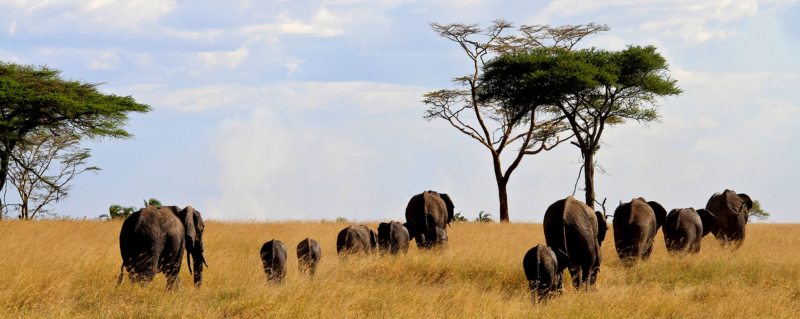
Walking Safari Tanzania:Thrilling Ways to Experience the Bush Beyond a Vehicle
A walking safari Tanzania experience changes the pace of a safari by putting you on foot with a trained guide rather than observing wildlife entirely from a vehicle.
Instead of covering kilometres searching for large animals, walking allows you to focus on the smaller details of the landscape.
You may notice:
- Animal tracks.
- Dung and other signs.
- Insects.
- Birds.
- Plants.
- Scents.
- Sounds.
- Changes in the terrain.
A walking safari Tanzania experience is therefore less about covering distance and more about understanding the ecosystem.
It can also be combined with other activities, including night drives and fly-camping, depending on the destination and property.
Walking Safari Tanzania: Why Is Walking Different From a Game Drive?
A walking safari Tanzania experience reveals aspects of the ecosystem that can easily be missed from a vehicle, while a traditional game drive remains better for covering large distances and finding major wildlife.
A vehicle gives you:
- Greater range.
- Faster movement.
- Protection from weather.
- Better access to distant sightings.
- An efficient way to search for large animals.
Walking gives you:
- A slower pace.
- Close attention to tracks.
- Greater awareness of sounds and smells.
- A stronger connection with the landscape.
- More detailed interpretation from your guide.
Neither replaces the other.
The best itinerary can use both.
Walking Safari Tanzania: Where Is It Possible?
Walking safari Tanzania activities are not permitted everywhere, and opportunities depend on park regulations, concession rules, private conservancies and the specific camp or operator.
This distinction is important.
Many national parks restrict where visitors can leave vehicles.
Other areas, particularly certain private concessions and designated walking areas, can offer more flexibility.
Potential walking locations can include:
- Private concessions.
- Wildlife management areas.
- Selected conservancies.
- Designated park areas.
- Camp surroundings.
- Specialist walking safari properties.
Always confirm the rules for the exact destination.
Walking Safari Tanzania: National Parks vs Private Areas
A walking safari Tanzania experience is often easier to arrange in private concessions and specialist walking areas than in heavily regulated national park zones.
National parks exist under specific conservation regulations.
Those rules may limit:
- Where people can walk.
- When walking is permitted.
- How guides operate.
- How close visitors can approach wildlife.
- Whether armed guides are required.
Private concessions may have different operating frameworks.
That can create opportunities for:
- Walking.
- Night drives.
- Bush meals.
- Fly-camping.
- Specialist wildlife experiences.
The exact rules still depend on the property and location.
Walking Safari Tanzania: What Happens During a Walk?
A walking safari Tanzania excursion usually begins with a safety briefing before a trained guide leads guests along a carefully selected route.
The guide may explain:
- How to walk quietly.
- How to stay together.
- What to do if wildlife is encountered.
- How to read tracks.
- How to interpret animal behaviour.
- How to respond to instructions.
The pace is usually deliberate.
You may stop frequently to examine tracks, plants or other signs.
A walk is therefore an interpretive experience rather than simply a hike from one point to another.
Walking Safari Tanzania: What Wildlife Can You See?
A walking safari Tanzania experience is not primarily about getting close to large predators, but wildlife sightings can still be an important part of the experience.
Depending on the destination, you may encounter:
- Elephants.
- Giraffes.
- Antelope.
- Zebras.
- Warthogs.
- Birds.
- Smaller mammals.
- Tracks and signs of predators.
The guide’s ability to read the environment is crucial.
Sometimes the most memorable moment is not seeing an animal but understanding that it passed through the area recently.
Walking Safari Tanzania: Is It Safe?
A walking safari Tanzania activity is designed around risk management, trained guides and appropriate wildlife protocols rather than uncontrolled encounters with animals.
However, walking in wildlife areas carries inherent risks.
The guide’s instructions should always be followed.
Important principles include:
- Stay with the group.
- Do not run.
- Do not approach wildlife independently.
- Listen to the guide.
- Maintain the required distance.
- Avoid sudden movements.
- Wear suitable clothing.
- Tell the guide about relevant mobility limitations.
Safety procedures vary by location.
Ask your operator what guide qualifications, equipment and local regulations apply to the specific walk.
Walking Safari Tanzania: How Fit Do You Need to Be?
Most walking safari Tanzania experiences do not require extreme fitness, but travellers should be comfortable walking for several hours over uneven natural terrain.
A walk may involve:
- Grass.
- Dust.
- Sand.
- Rocks.
- Slopes.
- Uneven paths.
The distance and duration vary.
Before booking, ask:
- How long is the walk?
- How far do guests normally walk?
- Is the terrain difficult?
- Are there steep sections?
- Can the pace be adjusted?
- Can shorter walks be arranged?
A good itinerary should match the activity to your ability.
Walking Safari Tanzania: What Should You Wear?
Walking safari Tanzania clothing should prioritise comfort, protection from the sun and insects, and appropriate footwear for uneven terrain.
Useful clothing can include:
- Lightweight trousers.
- Long-sleeved shirts.
- Comfortable walking shoes.
- A hat.
- Sunglasses.
- Light layers.
- Neutral-coloured clothing.
Avoid excessively heavy clothing in hot conditions.
Your camp or safari operator can provide destination-specific advice based on season and terrain.
Walking Safari Tanzania: The Role of the Guide
The guide is central to a walking safari Tanzania experience because the quality of the walk depends heavily on the guide’s knowledge of wildlife behaviour, tracks, plants and safety procedures.
A skilled guide can transform an ordinary walk into a detailed ecological lesson.
They may identify:
- Fresh tracks.
- Old tracks.
- Feeding marks.
- Territorial signs.
- Animal calls.
- Plant species.
- Insect activity.
The guide also determines how the group responds to wildlife.
Ask your safari operator about the guides who conduct walking activities.
Night Drive Safari: Seeing the Bush After Dark
A night drive safari provides a completely different wildlife experience because the landscape behaves differently after sunset and some nocturnal species become active.
During a night drive, you may encounter:
- Nocturnal predators.
- Genets.
- Civets.
- Bushbabies.
- Hares.
- Porcupines.
- Owls.
- Nightjars.
- Chameleons.
- Other nocturnal wildlife.
A spotlight may be used according to local rules.
The experience is often quieter and more atmospheric than a daytime game drive.
Night Drive Safari: Where Is It Allowed?
A night drive safari is not permitted in every national park, so travellers should check the regulations of the specific destination rather than assuming that every safari area offers after-dark driving.
Some national parks restrict vehicle activity after sunset.
Other areas, particularly certain private concessions and wildlife management areas, may permit night drives.
This is one reason private conservancies and concessions can provide a different safari experience from national parks.
If a night drive is important to you, build it into the itinerary from the beginning.
Night Drive Safari: What Makes It Special?
A night drive safari adds another dimension to wildlife viewing because you experience the same landscape under completely different conditions.
At night:
- Temperatures can drop.
- Animal behaviour changes.
- Sounds become more noticeable.
- Some species emerge.
- Visibility becomes limited.
- The guide’s tracking skills become particularly important.
The experience is not necessarily about finding the biggest animals.
It is about seeing a different side of the ecosystem.
Night Drive Safari: Is It Worth Adding?
A night drive safari can be particularly worthwhile for repeat safari travellers, photographers interested in nocturnal wildlife and visitors who want experiences beyond standard daytime game drives.
It can be less essential for someone visiting Africa for the first time with a very short itinerary.
If you have only two or three days, prioritise the destination’s core wildlife experience first.
If you have more time, night drives can add variety.
Fly Camping Serengeti: Sleeping in the Wilderness
Fly camping Serengeti offers a more immersive safari experience by taking guests away from permanent accommodation and into a temporary bush camp.
The term “fly-camping” generally refers to a lightweight temporary camp established in a remote area.
Depending on the operator and location, the setup may include:
- Tents.
- Sleeping arrangements.
- Simple camp furniture.
- A cooking area.
- Basic washing facilities.
- A small support team.
It is designed around the wilderness experience rather than luxury accommodation.
Fly Camping Serengeti: What Is the Experience Like?
Fly camping Serengeti is about simplicity, remoteness and immersion rather than hotel-style comfort.
You may spend your day:
- Walking.
- Tracking wildlife.
- Exploring on foot.
- Watching the sunset.
- Sitting around a campfire.
- Listening to the night sounds.
The temporary nature of the camp is part of the appeal.
There is no large permanent lodge surrounding you.
Instead, the landscape becomes the main feature.
Fly Camping Serengeti: Is It Really Camping?
Fly camping Serengeti is genuine bush camping, but the level of comfort depends on the operator and the specific arrangement.
Some mobile camps are relatively comfortable.
A minimalist fly-camp can be much simpler.
Before booking, ask what is included.
For example:
- What type of tent is provided?
- Is there a proper bed?
- Is there a private toilet?
- Is there a shower?
- How are meals prepared?
- Is there electricity?
- How is luggage handled?
Never assume that “fly-camping” means the same thing everywhere.
Fly Camping Serengeti: Who Is It Best For?
Fly camping Serengeti is particularly suited to adventurous travellers who value wilderness immersion and are comfortable exchanging some conventional comforts for a more intimate bush experience.
It can suit:
- Experienced safari travellers.
- Photographers.
- Couples.
- Small private groups.
- Walking enthusiasts.
- Adventure travellers.
It may be less suitable for travellers who require:
- Full hotel facilities.
- Constant electricity.
- Air conditioning.
- Luxury bathrooms.
- Minimal physical activity.
The appeal is the wilderness itself.
Walking Safari Tanzania: Combining Walking With Fly-Camping
Combining a walking safari Tanzania experience with fly-camping can create one of the most immersive ways to experience the African bush.
Instead of returning to a permanent lodge after every activity, you can move through the landscape more slowly.
A typical experience might include:
Morning: Walking and tracking
Afternoon: Rest and camp
Evening: Bush dinner
Night: Listening to wildlife around camp
The exact itinerary depends on the location and operator.
Walking Safari Tanzania: Combining Walking With Night Drives
A walking safari Tanzania itinerary can sometimes be paired with a night drive safari, giving travellers opportunities to experience both the daytime and nocturnal sides of the ecosystem.
For example:
Morning: Walking safari
Afternoon: Rest
Evening: Sunset
Night: Night drive
This combination works particularly well for travellers who want activities beyond conventional game drives.
Availability depends on the destination.
Walking Safari Tanzania: Is It Available in the Serengeti?
A walking safari Tanzania experience in the Serengeti depends on the specific area, regulations, camp and concession arrangement rather than being universally available throughout the park.
The Serengeti is enormous.
Different areas operate under different rules and tourism structures.
If walking is a priority, do not simply book “Serengeti” and assume a walking activity will be available.
Tell your safari specialist that walking is one of your primary objectives.
The itinerary can then be designed around locations where the activity is permitted.
Walking Safari Tanzania: What About the Ngorongoro Area?
Walking opportunities around the Ngorongoro ecosystem can add a very different perspective to a traditional crater game drive, but activities depend on the designated area and applicable regulations.
Walking can focus more heavily on:
- Landscape.
- Maasai culture where appropriate.
- Plants.
- Birds.
- Tracks.
- Local ecology.
The famous Ngorongoro Crater itself is primarily experienced through vehicle-based game drives.
Ask specifically where walking is available.
Walking Safari Tanzania: What About Southern Tanzania?
Southern Tanzania can be particularly interesting for travellers seeking walking safari Tanzania experiences because some properties and wildlife areas offer activities beyond conventional vehicle safaris.
Destinations such as:
- Nyerere.
- Ruaha.
- Udzungwa.
can provide different combinations of wildlife, walking and wilderness experiences.
However, the exact activities depend on the property and area.
Southern Tanzania is also generally suited to travellers looking for a quieter safari style.
Walking Safari Tanzania: Walking vs Hiking
A walking safari Tanzania experience is primarily a wildlife and interpretation activity, while hiking is generally focused more heavily on distance, terrain and physical challenge.
A walking safari may involve a relatively short distance but extensive stops.
A hike may involve:
- Steeper terrain.
- Longer distances.
- Higher physical effort.
- More emphasis on scenery.
This distinction matters when choosing activities.
If you want wildlife tracking, choose a walking safari.
If you want mountain scenery and physical challenge, look for a hiking experience.
Walking Safari Tanzania: Photography Considerations
Walking safari Tanzania photography requires a different approach from vehicle photography because you need to balance camera equipment with mobility and safety.
A large telephoto lens may be useful for distant wildlife but cumbersome during a long walk.
Consider carrying:
- A lightweight camera body.
- One versatile lens.
- Extra batteries.
- Memory cards.
- A small bag.
Your guide’s instructions should always take priority over getting a photograph.
Never move closer to wildlife for a better shot.
Walking Safari Tanzania: The Sounds of the Bush
One of the greatest advantages of a walking safari Tanzania experience is the opportunity to experience the sounds of the ecosystem without a vehicle engine running.
You may hear:
- Birds calling.
- Insects buzzing.
- Animals moving through grass.
- Distant mammals.
- Wind through vegetation.
These sounds help you understand how wildlife uses the environment.
The experience can be surprisingly intense because your attention becomes much more focused.
Walking Safari Tanzania: What Does It Add to a First Safari?
A walking safari Tanzania activity can add depth to a first safari, but it should complement rather than replace the core game-viewing experience.
First-time visitors generally want to see:
- Elephants.
- Lions.
- Leopards.
- Buffalo.
- Giraffes.
- Zebras.
- Other iconic wildlife.
A vehicle safari is often the most efficient way to achieve that.
Walking then adds a different layer.
You move from asking:
“What animals can I see?”
to asking:
“How does this ecosystem work?”
Walking Safari Tanzania: What Does It Add for Repeat Travellers?
For repeat safari travellers, a walking safari Tanzania experience can provide a fresh perspective on familiar landscapes and wildlife destinations.
You may already have experienced:
- Multiple game drives.
- Big-cat sightings.
- Large herds.
- Famous viewpoints.
Walking changes the objective.
Instead of chasing sightings, you can spend time understanding:
- Tracks.
- Plants.
- Animal behaviour.
- Ecology.
- Smaller species.
- Landscape changes.
That can make a repeat safari feel completely different.
Walking Safari Tanzania: Weather and Season
The best conditions for a walking safari Tanzania experience depend on the destination, season, temperature, rainfall and terrain.
Consider:
- Early morning temperatures.
- Midday heat.
- Rainfall.
- Mud.
- Vegetation density.
- Insect activity.
Early morning walks can be particularly pleasant because temperatures are cooler.
Your operator can recommend the most suitable timing for your specific route.
Walking Safari Tanzania: A Practical Packing List
A walking safari Tanzania packing list should be lighter and more practical than a conventional lodge holiday because you will carry what you need while moving through the bush.
Consider:
- Comfortable walking shoes.
- Lightweight trousers.
- Long-sleeved shirt.
- Hat.
- Sunglasses.
- Sunscreen.
- Insect repellent.
- Water bottle.
- Small daypack.
- Camera.
- Binoculars.
- Light rain layer.
Your operator may provide additional equipment depending on the activity.
Walking Safari Tanzania: 9 Ways to Get More From the Experience
A successful walking safari Tanzania experience depends as much on mindset and preparation as on the destination itself.
1. Listen to your guide
Their instructions are essential.
2. Walk quietly
Noise reduces the opportunity to observe wildlife.
3. Watch the ground
Tracks can tell an important story.
4. Ask questions
Learn about plants, insects and animal behaviour.
5. Avoid rushing
The point is observation.
6. Wear appropriate shoes
Comfort matters.
7. Carry enough water
Walking in warm conditions increases your fluid needs.
8. Keep your camera accessible
But never prioritise photography over safety.
9. Stay flexible
Wildlife encounters cannot be guaranteed.
Walking Safari Tanzania: How to Choose the Right Operator
Choosing the right operator is particularly important for a walking safari Tanzania experience because guiding quality, local knowledge and safety procedures can significantly affect the experience.
Ask:
- Who leads the walks?
- What training do guides have?
- Where does walking take place?
- How long are walks?
- What wildlife is commonly encountered?
- What safety procedures are used?
- Is walking included in the camp rate?
- Is a night drive available?
- Is fly-camping available?
The answers should be specific.
Walking Safari Tanzania: Frequently Asked Questions
What is a walking safari Tanzania experience?
It is a guided wildlife experience conducted on foot rather than entirely from a safari vehicle.
Is walking allowed throughout Tanzania’s national parks?
No. Regulations vary by park and location, and many areas restrict where visitors can walk.
Is a walking safari Tanzania experience dangerous?
Walking in wildlife areas carries inherent risks, but professional activities are structured around trained guides, safety procedures and local regulations.
How fit do I need to be?
Most walks do not require extreme fitness, but you should be comfortable walking on uneven natural terrain.
Can I see lions on a walking safari?
Wildlife sightings are unpredictable. Walking is generally focused on interpretation and tracking rather than approaching large predators.
What is a night drive safari?
It is a guided vehicle excursion after dark, where permitted, designed to observe nocturnal wildlife and experience the bush at night.
Is a night drive safari available in every national park?
No. Night-driving regulations vary by destination.
What is fly camping Serengeti?
Fly camping Serengeti generally refers to a lightweight temporary bush camp established in a remote area rather than staying in a permanent lodge.
Is fly camping comfortable?
Comfort varies significantly between operators. Ask about beds, bathrooms, showers, electricity and other facilities before booking.
Can walking and fly-camping be combined?
Yes, where the specific operator and area permit it. This can create a particularly immersive wilderness experience.
Can I combine walking with night drives?
Sometimes. The combination depends on local regulations, camp location and the itinerary.
Is walking suitable for children?
It depends on the age of the child, the destination and the operator’s policies. Always ask about minimum ages and walking conditions.
What should I wear?
Comfortable closed walking shoes, lightweight clothing, sun protection and layers appropriate to the season are generally useful.
Is walking better than a game drive?
Neither is universally better. Game drives cover more ground and are generally better for locating major wildlife, while walking provides deeper ecological interpretation.
Conclusion: Make Your Walking Safari Tanzania Experience More Immersive
A walking safari Tanzania experience offers something that a vehicle cannot fully reproduce: the chance to slow down, read the landscape and experience the bush through your own footsteps.
Walking can be combined with:
- Traditional game drives.
- Night drives.
- Fly-camping.
- Bush meals.
- Birding.
- Specialist wildlife activities.
The important point is to choose activities that are actually permitted in your chosen destination.
If walking safari Tanzania is a priority, tell your safari specialist before the itinerary is designed.
The same applies if you specifically want a night drive safari or fly camping Serengeti.
These activities are not universally available, and building the itinerary around them from the beginning gives you a much better chance of getting the experience you want.
For travellers who want more than ticking animals off a list, a well-planned walking safari Tanzania experience can transform the way you understand East Africa.
Plan a Specialist Tanzania Safari
Odysseys From Africa can help design a Tanzania itinerary around your preferred safari activities, including walking where permitted, night drives and specialist wilderness experiences.
When requesting an itinerary, tell your safari specialist if you want:
- Walking safaris.
- Night drives.
- Fly-camping.
- Private guiding.
- Photography.
- Birding.
- Fewer vehicles.
- Remote wilderness areas.
Your itinerary can then be structured around the destinations and properties that genuinely offer the experiences you want.