
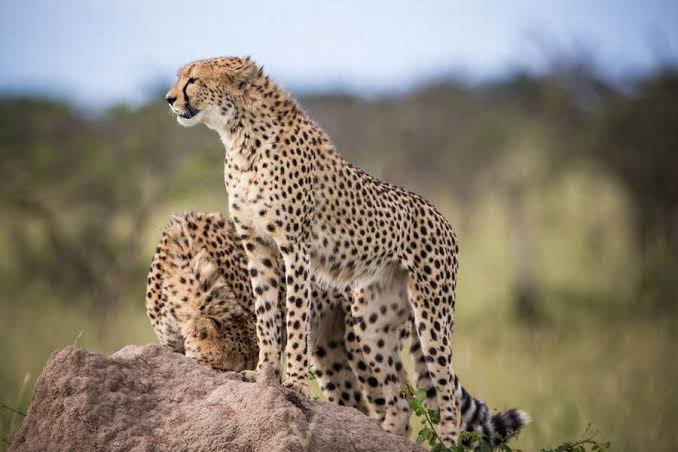
Photographing Big Cats: Settings, Light and Etiquette
A big cat photography safari can produce some of the most rewarding wildlife photographs in Africa. Lions resting beneath an acacia tree, leopards moving silently through golden grass, or cheetahs scanning the plains can all create extraordinary photographic opportunities. However, getting the best images requires more than an expensive camera.
You need to understand light, movement, distance, composition and animal behaviour. You also need to know when to put the camera down.
The best wildlife photographs are often created when photographers anticipate what an animal may do rather than simply reacting after the moment has happened.
Whether you are photographing lions in the Serengeti, leopards in the Northern Circuit or wild dogs in Southern Tanzania, this guide covers practical safari camera settings, low-light techniques, composition and wildlife photography etiquette.
Why Big Cat Photography Is Challenging
Big cat photography safari conditions can change quickly, making it important to understand your equipment before the animal does something unexpected.
Lions and leopards may remain motionless for long periods before suddenly:
- Standing up.
- Yawning.
- Grooming.
- Calling.
- Walking towards another animal.
- Hunting.
- Interacting with cubs.
- Chasing prey.
You may have only a few seconds to capture the best image.
This is why understanding your camera settings before reaching the sighting is so important.
Best Camera for a Big Cat Photography Safari
Choosing the right camera is important on a big cat photography safari, particularly when you are working with moving animals and changing light.
You can achieve excellent results with either:
- DSLR cameras.
- Mirrorless cameras.
Important features include:
- Fast autofocus.
- Continuous autofocus tracking.
- High burst rate.
- Good low-light performance.
- High ISO capability.
- Large buffer.
- Reliable battery life.
However, equipment alone does not create a great photograph.
Knowing how to use your camera is more important than owning the most expensive body.
Best Lens for Big Cat Photography
The right telephoto lens can transform your big cat photography safari, giving you enough reach to photograph animals without disturbing them.
Popular focal lengths include:
100–400mm
A versatile option for safari.
It allows you to photograph:
- Individual animals.
- Wider environmental portraits.
- Animals relatively close to the vehicle.
200–500mm
Useful when animals are farther away.
This range provides additional reach while remaining practical for many safari vehicles.
600mm and Longer
Long lenses can produce excellent close-up compositions from a distance, particularly for smaller subjects or animals positioned far from the vehicle.
The trade-off is size, weight and cost.
Safari Camera Settings for Big Cats
The best safari camera settings depend on light and animal movement, but shutter speed, aperture, ISO and autofocus should be adjusted before the action begins.
A useful starting point is:
| Situation | Shutter Speed | Aperture | ISO |
|---|---|---|---|
| Resting lion | 1/500 sec | f/5.6–f/8 | Auto/400–1600 |
| Walking leopard | 1/1000 sec | f/5.6–f/8 | Auto |
| Running cheetah | 1/2000 sec+ | f/4–f/8 | Auto |
| Early morning | 1/500–1/1000 sec | f/2.8–f/5.6 | Auto/800–3200 |
| Portrait | 1/500 sec | f/4–f/5.6 | Auto |
These are starting points rather than fixed rules.
Your camera, lens, weather and subject behaviour will determine the final settings.
Shutter Speed for Big Cats
Shutter speed is one of the most important safari camera settings because even a perfectly focused image can be ruined by movement blur.
For stationary animals, you may be able to use:
1/500 second
For walking animals:
1/1000 second
For fast movement:
1/1600–1/2500 second or faster
A leopard suddenly jumping into a tree may require significantly more speed than a lion sleeping in the grass.
When in doubt, increasing shutter speed is often safer than trying to recover a blurred photograph later.
Aperture Settings
Getting your big cat photography safari settings right starts with choosing a fast enough shutter speed for the behaviour you expect to see.
Common settings include:
- f/2.8.
- f/4.
- f/5.6.
- f/8.
A wide aperture such as f/2.8 can create a beautiful blurred background.
However, extremely shallow depth of field can make it difficult to keep both eyes sharp if the animal is facing you at an angle.
For portraits, f/4–f/5.6 can sometimes provide a useful balance between subject separation and depth of field.
ISO for Safari Photography
Auto ISO is often extremely useful on safari because light can change rapidly while wildlife behaviour cannot wait for you to adjust every setting manually.
During the first hour after sunrise, you may need:
- ISO 800.
- ISO 1600.
- ISO 3200.
- Higher settings in particularly dark conditions.
Modern cameras can handle high ISO remarkably well.
A slightly noisy photograph that captures a leopard’s movement is generally more valuable than a perfectly clean but blurred image.
Photographing Big Cats in Low Morning Light
Early mornings are often the most rewarding part of a big cat photography safari, but they also demand careful exposure settings.
Before sunrise, avoid underexposing too aggressively.
Instead:
- Select your desired shutter speed.
- Choose an appropriate aperture.
- Allow Auto ISO to compensate for changing light.
- Monitor exposure compensation.
- Watch your histogram.
As sunlight increases, ISO will naturally fall.
Use Golden Hour Light
Golden-hour light is one of the biggest advantages of a big cat photography safari because warm light can bring out detail in fur and landscapes.
The first and final hours of sunlight can produce:
- Warm highlights.
- Long shadows.
- Golden grass.
- Backlighting.
- Rim lighting.
- Rich textures.
Try positioning the vehicle so the sunlight illuminates the animal from the side or behind.
Do not force the vehicle into a position that disturbs the animal simply to achieve better light.
Backlighting Big Cats
Backlighting can create beautiful silhouettes and glowing edges around a lion, leopard or cheetah’s fur.
Look for:
- Sun directly behind the animal.
- Grass catching the light.
- Dust illuminated around the subject.
- Backlit whiskers.
- Glowing fur.
Exposure becomes more challenging because the bright background can fool the camera’s metering system.
Check your histogram and adjust exposure when necessary.
Autofocus Settings
Continuous autofocus is generally the best choice for photographing moving big cats because it allows the camera to maintain focus as the animal changes position.
Depending on your camera, useful modes may include:
- AF-C.
- Animal tracking.
- Eye autofocus.
- Zone autofocus.
- Expanded focus areas.
For a stationary animal, single-point or small-area autofocus may give you more control.
Focus on the Eyes
The eyes should normally be the sharpest part of a big cat portrait because they create the emotional connection between the animal and the viewer.
When photographing:
- Lions.
- Leopards.
- Cheetahs.
try to place the focus point over the nearest visible eye.
If the eyes are sharp, the photograph often feels much stronger even when parts of the animal’s body fall outside the depth of field.
Composition Techniques
Strong composition can make a wildlife photograph more powerful without requiring the animal to perform dramatic behaviour.
Try:
Rule of Thirds
Place the animal slightly away from the centre.
Looking Room
If the animal is looking left, leave more space on the left side of the frame.
Environmental Portraits
Include the landscape to show where the animal lives.
Tight Portraits
Fill the frame with the face, eyes and distinctive markings.
Low-Angle Perspective
A lower camera position can make the animal appear more powerful, although your position is determined by the safari vehicle and safety requirements.
Photographing Lions
Lions are among the most rewarding subjects on a big cat photography safari because they can provide everything from quiet portraits to dramatic action.
Use resting periods to photograph:
- Faces.
- Paws.
- Yawns.
- Grooming.
- Cubs.
- Interactions between pride members.
If the lion begins moving, switch to a faster shutter speed before the action starts.
Photographing Leopards
Leopard sightings can make a big cat photography safari especially exciting because these cats are often found in trees, shade or dense vegetation.
Look for:
- Tail hanging from branches.
- Face framed by leaves.
- Leopard climbing.
- Prey cached in a tree.
- Walking through grass.
A long telephoto lens is particularly useful for leopard photography.
Patience is essential.
Photographing Cheetahs
Cheetahs require a different approach on a big cat photography safari because their movement can change from relaxed to extremely fast within seconds.
If a cheetah appears alert and focused:
- Increase shutter speed.
- Switch to continuous autofocus.
- Increase ISO if necessary.
- Use a wider focus area.
- Shoot bursts.
Do not wait until the animal starts running before changing settings.
Photographing Cubs and Family Groups
Young big cats offer opportunities for emotional images, but photographers should be especially careful not to pressure parents or interfere with natural behaviour.
Photograph:
- Cubs playing.
- Grooming.
- Sleeping together.
- Nursing.
- Young animals following adults.
Avoid encouraging animals to move or react for a photograph.
Wildlife Photography Etiquette
Good big cat photography safari practice means putting animal welfare ahead of getting the perfect photograph.
Follow these basic principles:
- Never ask the driver to chase an animal.
- Keep a safe distance.
- Do not shout to attract attention.
- Never throw objects to make an animal move.
- Do not use food to lure wildlife.
- Avoid blocking another vehicle’s view.
- Keep noise to a minimum.
- Follow your guide’s instructions.
- Respect park rules.
The animal’s welfare always comes first.
Give Other Vehicles a Chance
Your safari vehicle becomes your photographic platform during a big cat photography safari, so learning how to stabilise your camera is essential.
If several vehicles are waiting:
- Take your photographs.
- Allow others to enjoy the sighting.
- Avoid monopolising the best position.
- Communicate respectfully with your guide.
A professional photographer may need more time during a special behaviour event, but ordinary sightings should be shared fairly.
Never Pressure the Driver
Your guide should never be pressured into driving off-road, getting too close or disturbing wildlife simply to improve a photograph.
Responsible guides understand animal behaviour and park regulations.
A photograph is not worth:
- Disturbing a resting animal.
- Separating a mother from cubs.
- Blocking an animal’s movement.
- Destroying vegetation.
- Creating danger for visitors.
The best wildlife photographs come from patient observation rather than interference.
Respect Other Photographers
A safari vehicle may contain travellers with completely different photographic goals, so cooperation makes the experience better for everyone.
Some passengers may want:
- Close-up portraits.
- Landscape photographs.
- Video.
- Binocular viewing.
- Simply watching the animals.
Be aware of your camera movements and avoid blocking everyone’s view.
Don’t Spend the Entire Safari Looking Through the Viewfinder
The greatest benefit of a big cat photography safari is the experience itself, not simply the number of photographs stored on your memory card.
Put the camera down occasionally.
Watch the lion.
Listen to the sounds around you.
Observe the leopard’s behaviour.
Enjoy the silence.
Some safari moments are better experienced than photographed.
Essential Photography Accessories
A few practical accessories can make a major difference during long safari days.
Consider carrying:
- Spare batteries.
- Multiple memory cards.
- Lens cleaning cloth.
- Dust blower.
- Camera rain cover.
- Beanbag support.
- Lens hood.
- Portable power bank.
- Camera backpack.
A beanbag can be particularly useful for stabilising a long lens inside a safari vehicle.
Protecting Your Camera From Dust
Dust is one of the biggest practical challenges of safari photography, particularly during dry-season game drives.
To protect your equipment:
- Keep your camera bag closed.
- Avoid changing lenses unnecessarily.
- Use a lens hood.
- Carry cleaning equipment.
- Protect unused lenses.
- Clean equipment carefully at the end of the day.
If you have two camera bodies, using different lenses on each can reduce the need to change lenses in dusty conditions.
Photographing Big Cats From a Safari Vehicle
A safari vehicle offers a stable and safe platform, but photographers still need to manage vibration, reflections and limited space.
Useful techniques include:
- Turn off image stabilisation when appropriate for tripod use.
- Use a beanbag for support.
- Keep elbows supported.
- Avoid resting the lens against vibrating vehicle surfaces.
- Shoot through open windows where permitted.
- Use a lens hood to reduce glare.
Always follow your guide’s instructions regarding vehicle positioning and safety.
How to Improve Your Big Cat Photography Safari
Preparation is one of the easiest ways to improve your results because you can concentrate on the animal rather than searching through camera menus.
Before your safari:
- Learn your camera’s autofocus system.
- Practise changing ISO quickly.
- Practise switching between focus modes.
- Test your telephoto lens.
- Learn exposure compensation.
- Shoot moving subjects at home.
- Organise your memory cards.
- Charge all batteries.
You should be able to change your main settings without taking your eye away from the subject.
Combining Photography With a Tanzania Safari
A big cat photography safari can be incorporated into almost any Tanzania itinerary.
The Serengeti is particularly famous for lions, cheetahs and leopards, while destinations such as Ruaha offer excellent opportunities to photograph predators in a less crowded environment.
Consider combining your photography trip with:
- Tanzania Safaris for tailor-made wildlife itineraries.
- Serengeti for exceptional big-cat and Great Migration opportunities.
- Ruaha National Park Safari for remote Southern Tanzania wildlife photography.
- Mikumi National Park Safari for an accessible Southern Tanzania wildlife experience.
- Best of Northern Tanzania for a comprehensive Northern Circuit photography itinerary.
Frequently Asked Questions
What are the best safari camera settings?
A good starting point is a shutter speed of at least 1/500 second, continuous autofocus and Auto ISO. Increase shutter speed to 1/1000 second or faster when animals are moving.
What lens is best for big cat photography?
A 100–400mm lens is versatile, while 200–500mm or longer lenses provide additional reach for distant animals.
What is the best time for big cat photography?
Early morning and late afternoon generally provide the most attractive natural light, with softer shadows and warmer tones.
Should I use Auto ISO on safari?
Yes. Auto ISO can be extremely useful when light changes quickly, allowing you to maintain a suitable shutter speed and aperture.
How close can a safari vehicle get to lions and leopards?
Your guide should follow the relevant park regulations and maintain a safe distance. Never ask the driver to approach an animal simply for a better photograph.
What is the most important wildlife photography etiquette rule?
Put animal welfare first. Never disturb, chase, bait or pressure wildlife for a photograph.
Conclusion
A successful big cat photography safari combines technical preparation with patience and responsible behaviour. The right camera settings help you capture sharp images, but understanding animal behaviour and light is equally important.
Start with a fast enough shutter speed, use continuous autofocus for movement, allow ISO to rise when necessary and pay close attention to the eyes. Early morning and late afternoon provide beautiful light, while a telephoto lens gives you the reach needed to photograph animals without getting too close.
Just as importantly, practise good wildlife photography etiquette. Never pressure a driver to disturb an animal, respect other guests and remember that watching a lion or leopard in its natural environment is more important than getting the perfect frame.
At Odysseys From Africa, we can help build a photography-focused Tanzania itinerary around the destinations, seasons and wildlife experiences that best match your interests.
Contact Odysseys From Africa
Planning a big cat photography safari in Tanzania?
Our safari team can help arrange:
- Private wildlife photography safaris.
- Serengeti game drives.
- Great Migration photography trips.
- Ruaha wildlife adventures.
- Luxury safari camps.
- Private vehicles and guides.
- Northern and Southern Tanzania itineraries.
Explore:
- Tanzania Safaris
- Serengeti
- Ruaha National Park Safari
- Mikumi National Park Safari
- Best of Northern Tanzania
Odysseys From Africa
Location: Arusha, Tanzania
Email: info@odysseys-from-africa.com
Phone (Kenya): +254 710 450 797
Phone (Tanzania): +255 652 810 255
Website: https://odysseys-from-africa.com/