
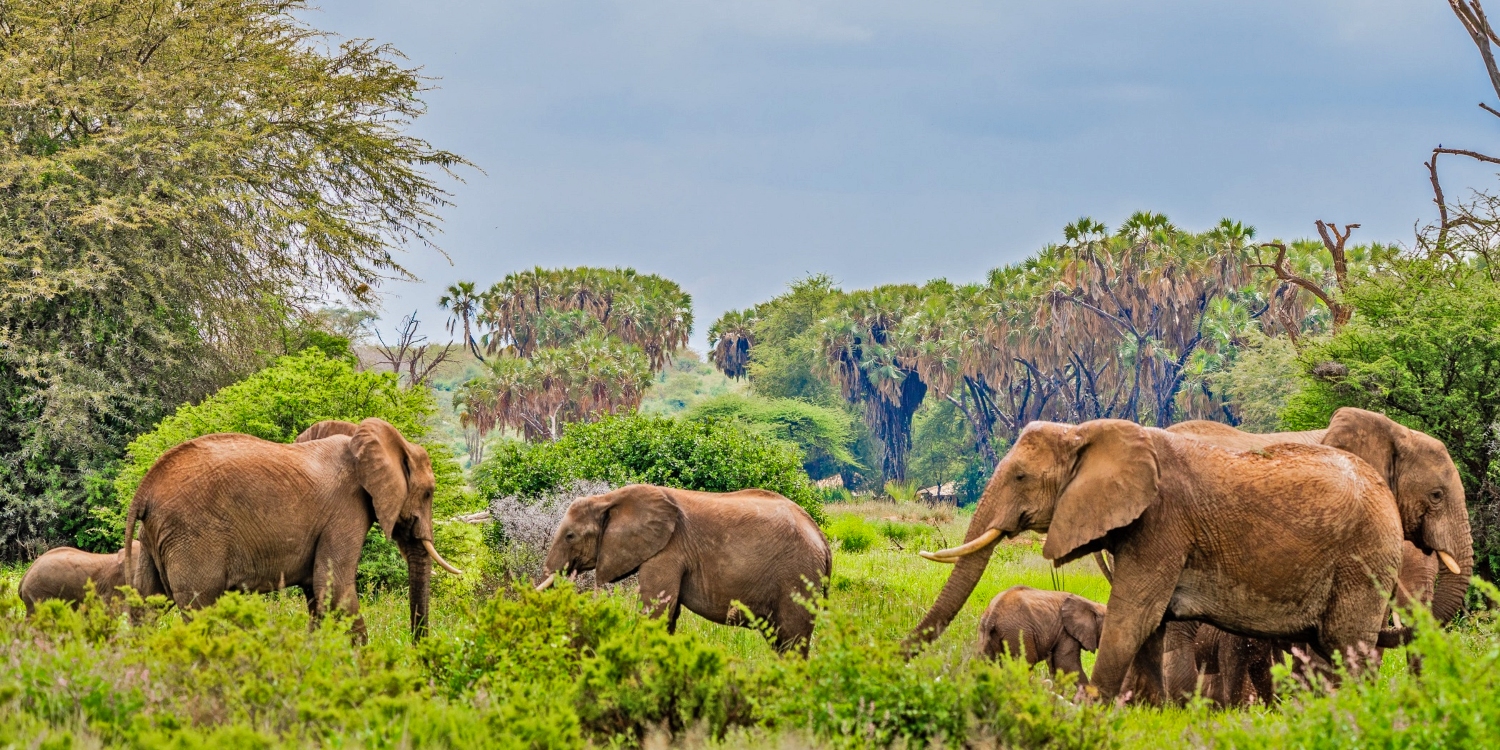
Samburu and the Northern Frontier: The Species You See Nowhere Else
A Samburu safari offers a very different experience from Kenya’s famous southern wildlife destinations. The landscapes are drier, the vegetation is more rugged and the wildlife includes several species that are strongly associated with northern Kenya.
The destination is particularly famous for the so-called Samburu Special Five: Grevy’s zebra, reticulated giraffe, gerenuk, Somali ostrich and Beisa oryx.
These animals are a major reason repeat safari travellers add Samburu to their itinerary.
But the appeal goes beyond unusual species. The Ewaso Ng’iro River provides an important water source through an otherwise semi-arid landscape, creating a concentration of wildlife around its banks.
A Samburu safari can therefore provide excellent game viewing while also introducing travellers to a very different side of Kenya.
This guide explains the Special Five, the northern landscape, the best time to visit, where to stay and how to combine Samburu with destinations such as the Masai Mara and Amboseli.
Samburu Safari: Why Visit Northern Kenya?
A Samburu safari combines unusual northern wildlife, dramatic semi-arid scenery and a quieter atmosphere than Kenya’s busiest safari destinations.
The landscape around Samburu is immediately different from the grasslands of the Masai Mara.
Expect:
- Dry plains.
- Rocky hills.
- Acacia woodland.
- Riverine vegetation.
- Doum palms.
- Rugged mountain scenery.
- Seasonal watercourses.
The Ewaso Ng’iro River is particularly important.
During dry periods, wildlife is often drawn towards areas where water and vegetation remain available.
This creates excellent opportunities for game viewing.
For travellers who have already visited the Mara or Amboseli, Samburu provides a genuine change of scenery rather than another version of the same safari.
Samburu Safari: What Makes the Wildlife Different?
The biggest attraction of a Samburu safari is the opportunity to see northern species that are uncommon or absent in many of Kenya’s better-known southern safari destinations.
The region supports wildlife adapted to dry conditions.
The five most famous species are:
- Grevy’s zebra.
- Reticulated giraffe.
- Gerenuk.
- Somali ostrich.
- Beisa oryx.
Together, these are commonly called the Samburu Special Five.
They are not a formal “Big Five” equivalent, but the term has become a useful way of describing the region’s distinctive wildlife.
A Samburu safari is particularly rewarding for travellers who have already seen lions, elephants and buffalo elsewhere and want to search for less familiar species.
Samburu Safari: The Special Five Explained
The Samburu Special Five are the region’s signature species and are a major reason wildlife enthusiasts travel to northern Kenya.
Each species has adapted to the region’s dry environment in a different way.
Grevy’s Zebra
Grevy’s zebra is larger and has narrower stripes than the more familiar plains zebra.
It is one of the most distinctive animals you can look for during a Samburu safari.
The species has experienced significant conservation challenges, making a sighting particularly meaningful.
Reticulated Giraffe
The reticulated giraffe is recognised by its striking geometric coat pattern.
Its distribution is strongly associated with northern Kenya.
Seeing one against the dry Samburu landscape can produce some of the region’s most memorable photographs.
Gerenuk
The gerenuk is one of Samburu’s most unusual antelopes.
Its long neck and legs allow it to browse on vegetation above the reach of many other antelope species.
One of its most distinctive behaviours is standing upright on its hind legs while feeding.
Somali Ostrich
The Somali ostrich is another northern specialist.
Its blue-grey neck and legs distinguish it from some other ostrich populations.
The bird’s large size makes it relatively easy to identify when encountered in open terrain.
Beisa Oryx
The Beisa oryx is a striking antelope adapted to dry conditions.
Its long, straight horns and contrasting markings make it one of the most attractive animals to photograph.
Finding all five is a rewarding objective, although wildlife sightings can never be guaranteed.
Samburu Safari: Are the Special Five Guaranteed?
No safari can guarantee every species, but Samburu offers one of the best opportunities to search for these northern specialists in their natural habitat.
Your chances depend on:
- Season.
- Recent sightings.
- Water availability.
- Guide knowledge.
- Time spent in the reserve.
- Wildlife movements.
A short one-night visit gives you less time to search than a three-night stay.
If the Special Five are a major priority, tell your safari operator before travelling so the itinerary and guiding approach can reflect that goal.
Samburu Safari: Other Wildlife to Expect
Beyond the Special Five, Samburu supports elephants, lions, leopards, cheetahs, buffalo, hippos, crocodiles and numerous smaller mammals and birds.
Depending on conditions, you may encounter:
- Elephants.
- Lions.
- Leopards.
- Cheetahs.
- Buffalo.
- Hippos.
- Crocodiles.
- Warthogs.
- Grant’s gazelles.
- Impalas.
- Hyenas.
- Jackals.
The presence of predators makes the ecosystem more than a specialist-species destination.
A Samburu safari can deliver both classic African wildlife and northern Kenya’s distinctive species.
Samburu Safari: The Importance of the Ewaso Ng’iro River
The Ewaso Ng’iro River is central to the Samburu ecosystem, providing water and supporting vegetation in a dry landscape.
The river creates a greener corridor through parts of the region.
Animals can gather near the river, particularly when surrounding areas become increasingly dry.
This makes riverine game drives particularly productive.
You may see elephants moving through vegetation, crocodiles in suitable sections and various antelope species feeding along the banks.
The river also adds visual variety to the landscape.
Samburu Safari: Landscape and Scenery
Samburu’s rugged landscape is one of its greatest strengths, combining dry plains, rocky hills, riverine vegetation and distant mountains.
The scenery can include:
- Red and brown earth.
- Acacia trees.
- Doum palms.
- Rocky outcrops.
- Dry grassland.
- River corridors.
- Mountain horizons.
This gives a Samburu safari a distinctive visual identity.
It can be particularly rewarding for photographers because wildlife can be framed against dramatic terrain rather than only open grassland.
Samburu Safari: When Is the Best Time to Visit?
The best time for a Samburu safari depends on wildlife concentration, rainfall, road conditions and whether you prioritise dry-season game viewing or greener landscapes.
Samburu can be visited throughout the year.
June to October
The dry season is popular for wildlife viewing.
As water becomes more limited, animals may concentrate around the river and other reliable sources.
This can make searching for wildlife easier.
November and December
The short rains can bring fresh vegetation and greener scenery.
Bird activity may also increase.
January and February
These months can offer good wildlife viewing and relatively dry conditions between rainfall periods.
March to May
The long rains can make the landscape greener but may create more challenging road conditions.
The lower visitor numbers can appeal to travellers who prefer a quieter safari.
Samburu Safari: The Best Time for the Special Five
Dry periods can be particularly useful for searching for Samburu’s Special Five because wildlife may become more concentrated around water and productive feeding areas.
However, the Special Five are resident species rather than seasonal migrants.
You do not need to travel during one specific month to have a chance of seeing them.
The quality of your guide and the amount of time spent exploring can be just as important as the calendar.
A three-night safari generally gives you more opportunities than a rushed overnight stop.
Samburu Safari: How Many Days Do You Need?
Two nights can introduce you to Samburu, but three nights is a better option if the Special Five and northern wildlife are major priorities.
Two-Night Itinerary
Day 1: Arrive and afternoon game drive.
Day 2: Morning and afternoon game drives.
Day 3: Morning drive and departure.
Three-Night Itinerary
Day 1: Arrival and afternoon game drive.
Day 2: Full day of wildlife exploration.
Day 3: Morning and afternoon game drives.
Day 4: Final morning activity and departure.
Three nights allow your guide more time to search different habitats.
Samburu Safari: Where Should You Stay?
The best accommodation for a Samburu safari combines convenient wildlife access, good guiding and a comfortable base from which to explore the northern landscape.
Options include:
- Luxury lodges.
- Tented camps.
- Mid-range safari camps.
- Conservancy accommodation.
When choosing a property, consider:
- Location.
- Vehicle arrangements.
- Guide experience.
- Camp size.
- Meals.
- Room style.
- Conservation model.
- Access to nearby wildlife areas.
A beautiful camp cannot compensate for an itinerary that gives you too little time in the ecosystem.
Samburu Safari: Reserve vs Conservancy
Staying within or around a conservancy can provide a more intimate experience, while the national reserve offers classic wildlife viewing across a larger protected landscape.
Conservancy-based experiences may offer activities such as:
- Walking.
- Night drives where permitted.
- Cultural experiences.
- Specialised guiding.
The exact activities depend on the property and local rules.
Travellers interested in community conservation should ask how their chosen accommodation supports local landowners and conservation efforts.
For comparison, our guide to Mara conservancies explains how Kenya’s conservancy model can work in another major safari ecosystem.
Samburu Safari: Cultural Experiences
A Samburu safari can also provide opportunities to learn about the Samburu people and their relationship with the surrounding landscape.
Cultural experiences may include:
- Village visits.
- Traditional crafts.
- Guided cultural walks.
- Discussions with community members.
- Learning about pastoral traditions.
These visits should be approached respectfully.
A cultural experience should not feel like a performance arranged solely for tourists.
Choose operators who work directly with communities and explain how visitor payments benefit local participants.
Samburu Safari: Is It Good for Families?
Samburu can be an excellent family destination, particularly for children interested in unusual animals and varied landscapes.
The Special Five provide an educational element.
Children can learn to distinguish:
- Grevy’s zebra from plains zebra.
- Reticulated giraffe from other giraffe populations.
- Gerenuk from other antelope.
- Beisa oryx from similar species.
- Somali ostrich from other large birds.
Families should discuss age restrictions for walking activities and other experiences before booking.
Samburu Safari: Is It Good for Photography?
Samburu is an excellent destination for wildlife photography because its distinctive species and rugged scenery create compositions that differ from Kenya’s southern parks.
Useful equipment includes:
- Telephoto lens.
- Wide-angle lens.
- Extra batteries.
- Memory cards.
- Lens-cleaning cloth.
- Camera beanbag.
- Dust protection.
The dry landscape can create strong colours and contrast.
Early morning and late afternoon provide softer light.
The Special Five also offer opportunities for a different photographic portfolio from the standard safari collection of lions and elephants.
Samburu Safari: Why Repeat Safari Travellers Should Go
Samburu is particularly attractive to repeat safari travellers because it adds new species and landscapes after a first trip to destinations such as the Masai Mara or Amboseli.
If you have already seen:
- Lions in the Mara.
- Elephants in Amboseli.
- Rhinos in other Kenyan parks.
then Samburu can broaden your wildlife experience.
You may still see lions and elephants, but you will also have the opportunity to search specifically for northern specialists.
This is why a Samburu safari can be an excellent second or third Kenya safari.
Samburu Safari: Combining Samburu With the Masai Mara
Combining Samburu with the Masai Mara creates a strong itinerary because the two destinations offer different wildlife, scenery and safari experiences.
A possible itinerary is:
Days 1–3: Samburu.
Days 4–7: Masai Mara.
The northern landscapes contrast dramatically with the Mara’s open grasslands.
You also gain opportunities to search for the Special Five before moving south for big-cat and migration-focused game viewing.
Read our detailed Masai Mara safari guide when planning the southern part of your trip.
Samburu Safari: Combining Samburu With Amboseli
Samburu and Amboseli make an interesting combination for travellers who want two very different elephant and landscape experiences.
Amboseli is famous for:
- Large elephant groups.
- Open plains.
- Mount Kilimanjaro views.
Samburu is known for:
- Special Five species.
- Rugged northern scenery.
- Ewaso Ng’iro River.
- Dry-country wildlife.
The combination creates a more diverse Kenya itinerary.
Our Amboseli safari guide covers timing, elephants and Kilimanjaro visibility in greater detail.
Samburu Safari: Combining Samburu With Laikipia
Adding Laikipia can create a more varied northern Kenya journey, particularly for travellers interested in conservancies and specialised wildlife experiences.
Laikipia is known for diverse conservation landscapes and private or community-managed wildlife areas.
Depending on your chosen property, you may have opportunities for:
- Walking.
- Night drives.
- Specialist wildlife viewing.
- Conservation experiences.
- Horseback activities where offered.
A northern Kenya itinerary can therefore go beyond conventional game drives.
Samburu Safari: What Should You Pack?
Pack lightweight clothing, sun protection, comfortable footwear and a warm layer for cool early mornings in northern Kenya.
Useful items include:
- Lightweight trousers.
- Long-sleeved shirts.
- T-shirts.
- Fleece or light jacket.
- Comfortable walking shoes.
- Hat.
- Sunglasses.
- Sunscreen.
- Binoculars.
- Camera.
- Extra batteries.
- Small day bag.
The environment can be dusty during dry periods, so protect cameras and other electronics.
Samburu Safari: Responsible Tourism
Responsible tourism is particularly important in northern Kenya because wildlife conservation is closely connected to surrounding communities and land use.
Visitors should:
- Follow guide instructions.
- Avoid littering.
- Keep appropriate distances from wildlife.
- Avoid feeding animals.
- Respect local communities.
- Ask permission before taking photographs of people.
- Support responsible local businesses.
- Stay on authorised routes.
Choosing community-conscious accommodation can help ensure tourism contributes to the long-term value of conservation.
Samburu Safari: Frequently Asked Questions
What is Samburu famous for?
Samburu is particularly famous for the Special Five: Grevy’s zebra, reticulated giraffe, gerenuk, Somali ostrich and Beisa oryx.
What are the Special Five in Samburu?
The Special Five are five northern Kenya wildlife species strongly associated with the Samburu ecosystem.
Is Samburu worth visiting?
Yes. It is particularly worthwhile for travellers who want distinctive northern species, rugged landscapes and an experience different from the Masai Mara.
How many days do I need in Samburu?
Two nights can work for a short safari, but three nights provides more time to explore and search for the Special Five.
Can I see elephants in Samburu?
Yes. Elephants are among the wildlife species found in the ecosystem, particularly around riverine habitats.
Can I see lions in Samburu?
Yes. Lions are present, although sightings are never guaranteed.
When is the best time for a Samburu safari?
Dry-season months are popular for wildlife viewing, but Samburu can be visited year-round.
Can I combine Samburu with the Masai Mara?
Yes. The combination is excellent for travellers wanting contrasting northern and southern Kenya safari experiences.
Is Samburu good for a first safari?
Yes, although travellers whose priority is the classic Big Five or Great Migration experience may prefer to combine it with the Masai Mara.
Conclusion: Is a Samburu Safari Worth Adding to Your Kenya Trip?
A Samburu safari is one of the best choices in Kenya for travellers who want to go beyond the country’s most famous safari destinations.
The Special Five provide a strong reason to visit, particularly for repeat safari travellers who have already experienced the Masai Mara or Amboseli.
Grevy’s zebra, reticulated giraffe, gerenuk, Somali ostrich and Beisa oryx give Samburu a distinctive wildlife identity.
But the destination is more than a checklist of five species.
The Ewaso Ng’iro River, rugged hills, dry plains and riverine vegetation create a landscape that feels very different from the Mara.
The region’s connection between conservation, communities and tourism also adds depth to the experience.
If you have three or more nights available, Samburu can make an excellent addition to a wider Kenya itinerary.
Combine it with the Masai Mara for big cats and migration, Amboseli for elephants and Kilimanjaro, or Laikipia for additional conservancy experiences.
For repeat safari travellers especially, Samburu offers something genuinely different.
Odysseys From Africa can build a tailor-made Samburu safari around your preferred wildlife, accommodation, travel dates and other Kenyan destinations.
Contact Odysseys From Africa
Planning a Samburu safari in northern Kenya?
Our safari team can arrange:
- Samburu National Reserve safaris.
- Special Five wildlife experiences.
- Northern Kenya safaris.
- Private game drives.
- Luxury and mid-range accommodation.
- Conservancy stays.
- Cultural experiences.
- Photography-focused safaris.
- Kenya multi-park itineraries.
- Kenya and Tanzania combinations.
- Tailor-made East African safaris.
Explore More
- Kenya Safaris
- Masai Mara Safari Guide
- Mara Conservancies Explained
- Amboseli Safari Guide
- Big Cat Photography Safari
Odysseys From Africa
Location: Arusha, Tanzania
Email: info@odysseys-from-africa.com
Phone (Kenya): +254 710 450 797
Phone (Tanzania): +255 652 810 255
Website: https://odysseys-from-africa.com/